Last updated: 18 November 2026. This guide contains affiliate links; if you book through one we may earn a commission at no extra cost to you. How we make money.
Short answer: on a first trip to Amsterdam, stay in the Canal Ring, ideally around the Nine Streets. You can walk to the Anne Frank House, Dam Square and the museums, and you wake up in the Amsterdam you came to see. If you want the same canals with a quieter, more local feel, pick the Jordaan. If you care more about dinner than about postcard views, or want a little more room for your money, pick De Pijp.
Quick answer: where to stay in Amsterdam
| If you are… | Stay in | Our top pick |
|---|---|---|
| A first-time visitor | Canal Ring | Ambassade Hotel |
| After a quieter, lived-in neighbourhood | Jordaan | Mr. Jordaan |
| Here to eat and drink well | De Pijp | Sir Albert Hotel |
| Here for the Rijksmuseum and Van Gogh | Museum Quarter | Hotel Aalders |
| Watching the budget | Oost | Volkshotel |
In this guide
- Amsterdam neighbourhoods compared
- Canal Ring: best for first-timers
- Jordaan: best for couples and quiet evenings
- De Pijp: best for food lovers
- Museum Quarter: best for art and families
- Old Centre: best for short stays and day trips
- Oost: best for value
- Noord: best for views and repeat visitors
- Areas to think twice about
- What Amsterdam hotels cost in 2026
- Taxes, airport transfers and getting around
- FAQ
Amsterdam neighbourhoods compared
Amsterdam is small and flat. The historic core is a horseshoe of canals around Centraal Station, and almost everything a first-timer wants sits inside it or just south. The real differences are noise, price and crowds. The physical catch is inside the hotels: many canal-house hotels have steep, narrow stairs, so check for a lift if that matters.
| Area | Best for | Hills / walkability | Night noise | Transport | Mid-range price |
|---|---|---|---|---|---|
| Canal Ring | First trip, canals, shopping | Flat, walk almost everywhere | Low–medium | Trams; Rokin and Vijzelgracht metro | €€€€ (highest) |
| Jordaan | Couples, cafés, quiet | Flat, very walkable | Low; busier near bar streets | Trams on the edges only | €€€€ |
| De Pijp | Food, markets, nightlife | Flat; museums walkable | Medium on bar streets | Metro 52, trams | €€€ |
| Museum Quarter | Museums, Vondelpark, families | Flat; 20 min to Dam | Low | Trams; bus 397 from Schiphol | €€€ |
| Old Centre | Short stays, day trips by train | Flat, crowded | High near the Red Light District | Centraal Station, metro, trams | €€€ |
| Oost | Value, parks, longer stays | Flat; longer walk to centre | Low | Metro, trams | €€ |
| Noord | Views, design hotels | Spread out | Low | Free 24-hour ferry | €€ |
Canal Ring: best for first-timers
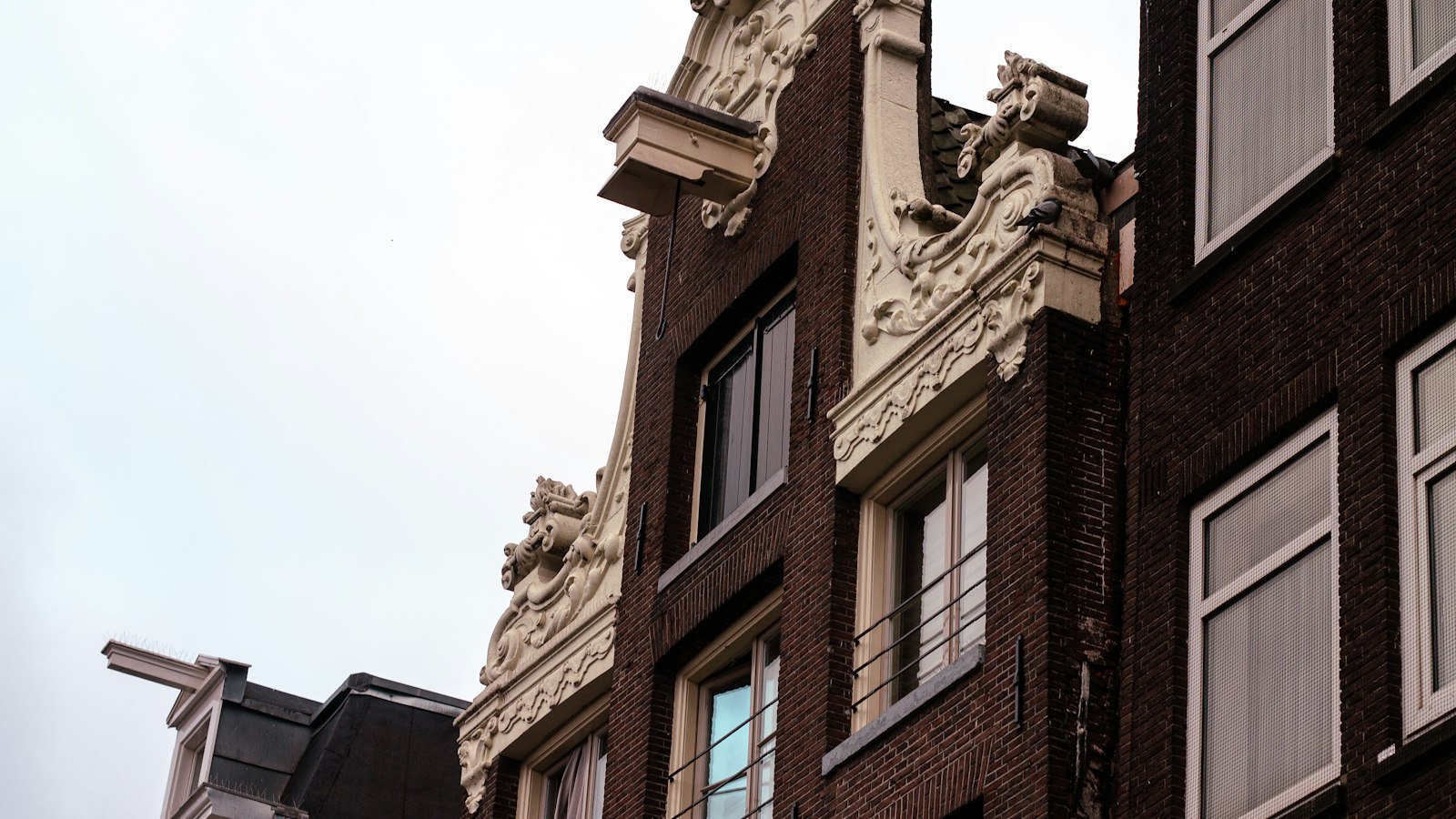
The Grachtengordel, the three concentric canals of Herengracht, Keizersgracht and Prinsengracht, is the Amsterdam of the postcards. Stay here and the Anne Frank House, the Nine Streets’ independent shops and wine bars and Dam Square are all on foot. The Rijksmuseum is a canal-side walk south.
The western half, around the Nine Streets, is the sweet spot. The southern edge near Vijzelstraat carries heavy traffic.
The trade-off: price. This is the most expensive and most in-demand area in the city, and the best canal-view rooms go months ahead for spring and summer. Rooms in converted canal houses are often small, and the stairs can be near-vertical.
- Value: Hotel Estheréa – one of the prettiest boutique hotels on the canals, and usually better value than its looks suggest. Book early.
- Mid-range: Ambassade Hotel – a row of linked canal houses on the Herengracht where most rooms look over the water, plus a library bar holding more than 5,000 books signed by visiting authors. Our first-timer pick.
- Splurge: Pulitzer Amsterdam – 25 connected 17th- and 18th-century townhouses between the Prinsengracht and Keizersgracht, built around a central garden. Corridors are narrow and there are steps everywhere, so it is not the best choice for limited mobility.
See all hotels in the Canal Ring →
Jordaan: best for couples and quiet evenings
Just west of the Prinsengracht, the Jordaan feels like a neighbourhood people live in: narrow canals, gabled houses and old brown cafés. It is calmer than the Canal Ring in the evening, and the southern end is close to the Nine Streets and the Anne Frank House.
The trade-off: hotels are few and small, and sell out early. Trams skirt the edges rather than running through the middle, so arriving with heavy bags usually means a taxi. The bars along the Rozengracht and Westergracht can be noisy at weekends, and the Van Gogh Museum is around half an hour away on foot.
- Budget: Amsterdam Wiechmann Hotel – one of the very few affordable options in the Jordaan, on the Prinsengracht, with rooms from singles to family suites; some face the canal.
- Mid-range: Mr. Jordaan – a canal-house hotel within walking distance of the Anne Frank House, with twins and a three-person room. Pricier than its size suggests, but the location is excellent.
See all hotels in the Jordaan →
De Pijp: best for food lovers
De Pijp, south of the canal belt, is where Amsterdam goes out to eat. The Albert Cuyp Market runs along its spine, and the side streets are packed with restaurants, bakeries and bars. The Rijksmuseum and Van Gogh Museum are walkable, and Metro 52 from De Pijp station reaches Centraal in a few stops.
The trade-off: it is not pretty in the canal-house sense, weekend crowds and market litter can grate, and the bars cluster on two or three streets that stay loud late. Trams rattle past early: street-facing rooms can wake you at about 6:30 am. Ask for a courtyard side.
- Mid-range: Sir Albert Hotel – a boutique hotel around the corner from the Albert Cuyp Market. Light sleepers should avoid street-view rooms because of the morning trams.
- Splurge: Hotel Okura Amsterdam – a high-rise on the southern edge of De Pijp with a bar on the 23rd floor, several restaurants and a spa with an indoor pool. It is further from the canals than anything else in this section.
Museum Quarter: best for art and families
The Museumkwartier, part of Oud-Zuid, is elegant, leafy and quiet. The Rijksmuseum, Van Gogh Museum and Concertgebouw are grouped around Museumplein, and Vondelpark is next door for morning runs or letting children loose. The airport bus 397 stops at Museumplein, which makes arrival unusually easy.
The trade-off: evenings are sedate, and Dam Square is about a 20-minute walk or a short tram ride away. Big roads such as the Overtoom carry traffic noise, and the area is pricey for what you get outside the luxury end.
- Mid-range: Hotel Aalders – a simple three-star one block from the Van Gogh Museum, with doubles and four-person rooms that suit families.
- Splurge: Conservatorium Hotel – a converted 19th-century music conservatory with big, light rooms and floor-to-ceiling windows, steps from the Rijksmuseum and Van Gogh Museum.
See all hotels in the Museum Quarter →
Old Centre: best for short stays and day trips
The medieval core between Centraal Station and Dam Square has the most hotels and the best transport in the city. For a short stay or day trips by train, staying near Centraal saves real time. The Anne Frank House is about 15 minutes’ walk from Dam, and the Rijksmuseum around 20.
The trade-off: it is the most crowded part of Amsterdam, and the streets in and around the Red Light District are loud late into the night. The calmer pocket is the eastern side towards Waterlooplein. Wherever you book, ask for a room at the back.
- Budget: Motel One Amsterdam Waterlooplein – modern, compact rooms on the quieter east side of the centre, close to the metro.
- Mid-range: Monet Garden Hotel – a four-star boutique on a quiet canal in the eastern centre, about 10 minutes’ walk from Centraal. Most rooms face the canal or garden, and a breakfast buffet is served daily.
- Splurge: Hotel TwentySeven – a small luxury hotel directly on Dam Square and a member of Small Luxury Hotels of the World. You pay for the address.
See all hotels in the Old Centre →
Oost: best for value
Amsterdam-Oost, east of the Amstel, mixes the leafy Plantage district (home to Artis zoo) with the cafés around Oosterpark. Hotels are larger and better value, and the metro and trams reach the centre in minutes.
The trade-off: you lose the canal-house atmosphere on your doorstep, and walking to Dam Square takes a while from most hotels. Main roads such as the Weesperstraat and Wibautstraat are busy.
- Budget: Generator Amsterdam – a hostel in Oost with private rooms as well as dorms, and trams to the centre close by.
- Mid-range: Volkshotel – 172 rooms in the former Volkskrant newspaper building, with Wibautstraat metro station across the road. The rooftop turns into a club until 4 am at weekends, so it is fun rather than restful. Breakfast is not included in the basic rate.
- Splurge: Pillows Grand Boutique Hotel Maurits at the Park – a 1908 former university building with big windows over Oosterpark, heated floors and a rooftop bar.
Noord: best for views and repeat visitors
Across the IJ from Centraal Station, Amsterdam-Noord is the former shipyard side of the city: the A’DAM Tower and its lookout, and creative venues around the NDSM wharf. The free GVB ferries leave from behind Centraal around the clock, and the shortest crossing takes about five minutes. Hotels are bigger and cheaper, with skyline views.
The trade-off: no canal houses, restaurants are spread out, and every outing starts with a ferry ride in whatever weather Amsterdam serves up. NDSM in particular has thin public transport. Good for a second visit or a design-hotel stay; not our pick for a first trip.
- Mid-range: Sir Adam Hotel – inside the A’DAM Tower, with large windows over the river and record players in the rooms.
- Splurge: Hotel Jakarta Amsterdam – in the former docklands east of Centraal: a five-storey atrium garden, a rooftop sky bar over the IJ and a wellness area with an indoor pool. Breakfast is usually included.
Areas to think twice about
The Red Light District. Worth a walk, but as a base it is noisy until the small hours. You can be just as central a few canals away.
Zuidoost. Chain hotels near the Arena look cheap and trains into town are frequent, but unless you have match or concert tickets there is little reason to stay, and event nights bring crowds.
Schiphol and Hoofddorp. Fine for one night before a dawn flight; a poor base for sightseeing, because you add a train ride to and from the city every day.
Sloterdijk and Amstelveen. Both sit outside the ring road. Links are good (tram 5 from Amstelveen takes about 20 minutes), but they are quiet and some streets are poorly lit at night. Compare with Oost first. If you are weighing an apartment instead, our hotel vs Airbnb guide explains when that actually wins.
What Amsterdam hotels cost in 2026
Amsterdam is one of Europe’s priciest hotel cities, and hotel VAT rose from 9% to 21% on 1 January 2026. Typical ranges per room per night:
| Type | Per night (EUR) | Roughly in USD / GBP |
|---|---|---|
| Hostel dorm bed | from €30 | from $33 / £25 |
| Two-star or budget hotel | €50–€150 | $55–$165 / £42–£125 |
| Three-star | €150–€300 | $165–$330 / £125–£250 |
| Four-star | €300–€450 | $330–$495 / £250–£375 |
| Five-star | €450+ | $495+ / £375+ |
Season matters more than area. Rate tracking for two adults puts January at the bottom of the year (around £96, or about €116, a night), November and December at roughly £109–£115 (€131–€139), and spring through autumn much higher, peaking at about £188 (€227) in September and October. These are the cheaper end of what is available, not averages.
When to book: for April (tulip season and King’s Day), May and September to October, book a free-cancellation rate three to six months out; the best canal-view rooms go first. For November to February, four to six weeks is usually enough, except around Christmas and New Year. Our guide to how far in advance to book a hotel has the wider data.
Taxes, airport transfers and getting around
Tourist tax. In 2026 Amsterdam charges 12.5% of the room price, calculated on the price before the 21% VAT. There is no fixed per-person fee and no cap. On 12 November 2026 the city council approved a rise to 16% from 1 January 2027, and the governing coalition wants to add a percentage point every year until it reaches 20%. On a €200 room in 2027 that means €42 VAT plus €32 tourist tax, a bill of €274 before breakfast. If you travel with children, ask the hotel how it applies the tax. Details are on the City of Amsterdam website.
From Schiphol Airport. The train is easiest. NS trains run from the station under Schiphol Plaza to Amsterdam Centraal in 16–17 minutes, up to eight times an hour by day, with hourly night trains. A second-class single costs €5.50 as an e-ticket or with a contactless bank card, or €7.10 on a paper ticket, which carries a €1.60 surcharge. For the Museum Quarter or Leidseplein, bus 397 (Amsterdam Airport Express) takes just over 30 minutes to Museumplein for €6.50. A taxi costs about €55–€95 and takes 25–45 minutes, depending on traffic.
Getting around. Trams, buses, the metro and ferries are run by GVB. You can tap in and out with a contactless bank card (OVpay): €1.16 per boarding plus about €0.22 per kilometre. Always tap out. Unlimited GVB tickets cost €10 for 24 hours, €16 for 48 hours and €21.50 for 72 hours, and an hour is €3.40. If you will use the airport train or bus 397 at both ends, the Amsterdam Travel Ticket (€20, €27 or €34 for one, two or three days) covers those as well as all GVB transport. Event dates are on I amsterdam, the official tourism site.
Safety. Amsterdam is a safe city by any standard; the hazard visitors underestimate is the bike lanes. Cycle lanes are busy and fast, and riders do not slow down for pedestrians, so look both ways before stepping off any kerb. Keep phones and wallets secure in crowded spots such as Dam Square and the Red Light District.
FAQ
What is the best area to stay in Amsterdam for a first visit?
The Canal Ring, especially around the Nine Streets. It puts the main sights within walking distance and is calmer at night than the Old Centre. The Jordaan is the best alternative if you want a quieter, more local feel.
How much is the tourist tax in Amsterdam?
12.5% of the room price before VAT for stays in 2026, rising to 16% from 1 January 2027. Check whether your booking price includes it.
How many nights do I need in Amsterdam?
Three nights covers the canals, the big museums and the Anne Frank House. Add a fourth for a day trip to Haarlem or Utrecht.
Do Amsterdam hotels have lifts?
Many canal-house hotels do not. If stairs are a problem, check for a lift or book a newer hotel in Oost or Noord.
How we researched this: facts were cross-checked in November 2026 against news reports on Amsterdam’s 2027 tourist-tax decision, Dutch hospitality-industry guidance on 2026 tax and VAT, current NS, GVB and airport-bus fares, hotel-rate tracking, hotel reviews and independent neighbourhood guides. Prices move; always confirm before you book.
Leave a Reply