Last updated: 21 October 2026. This guide contains affiliate links; if you book through one we may earn a commission at no extra cost to you. How we make money.
Short answer: five days is the right length for a first trip to Tokyo, and the way to not be exhausted by it is to stop treating the city as one place. Give each day one side of town: the old east (Asakusa, Ueno, Yanaka) on Day 1, the west (Meiji Shrine, Harajuku, Shibuya, Shinjuku) on Day 2, the bay and Ginza with teamLab and Tsukiji on Day 3, a train out to Kamakura on Day 4, and a slow last day in Shinjuku with one thing you chose yourself. Each day has one ticket to book ahead and a stop you can drop. Two things that catch people out in 2026: Shibuya Sky’s afternoon slots go weeks ahead, and the 72-hour subway ticket now costs ¥2,000, not the ¥1,500 older guides quote.
At a glance
| Day | Area | Theme |
|---|---|---|
| Day 1 | Asakusa, Ueno, Yanaka | Senso-ji before the crowds, the National Museum, an old-town evening |
| Day 2 | Meiji Shrine, Harajuku, Shibuya, Shinjuku | The forest shrine, the crossing from above, neon and yakitori |
| Day 3 | Toyosu, Tsukiji, Ginza, Tokyo Station | teamLab Planets, a market lunch, the polished centre |
| Day 4 | Kamakura | The Great Buddha, Hasedera, the little Enoden train, the sea |
| Day 5 | Shinjuku, then your pick | Shinjuku Gyoen, a free skyscraper view, Skytree or Akihabara or Ghibli |
The practical bit
- Best months: late October to early December for clear skies and autumn colour; late March to early April for cherry blossom, when hotels cost double. June is wet, July and August humid, January and February cold, dry and cheap.
- Pace: deliberately moderate. One booked anchor per day, nothing before 9 am except Day 1, and dinner within a ten-minute walk of the last stop. Stay off the trains between 8 and 9:30 am and 5:30 and 7:30 pm.
- Tickets and transport per person: roughly ¥1,000 on Day 1, ¥2,700 on Day 2, ¥3,800 on Day 3, ¥3,600 on Day 4 and ¥2,600 on Day 5 at October 2026 prices, about ¥13,700 (about $87 / £65) for the five days, plus around ¥1,000 a day on trains inside Tokyo. Food and hotels are on top.
- Book ahead: Shibuya Sky (afternoon slots go first), teamLab Planets (not sold at the door), and the Ghibli Museum if you want it (on sale on the 10th of the month before, and gone within hours). Everything else can be bought on the day.
- Days to watch: the Tokyo National Museum and Shinjuku Gyoen close on Mondays; most of Tsukiji Outer Market closes on Sundays and some Wednesdays; Golden Gai bars mostly shut on Sundays.
In this guide
- Day 1: Asakusa, Ueno and Yanaka
- Day 2: Meiji Shrine, Harajuku, Shibuya and Shinjuku
- Day 3: teamLab Planets, Tsukiji and Ginza
- Day 4: Kamakura day trip
- Day 5: Shinjuku Gyoen, then your choice
- Getting around Tokyo in 2026: Suica, subway tickets and the airports
- Accommodation tax and what hotels cost
- What we’d change
- FAQ
Day 1: Asakusa, Ueno and Yanaka
Start on the east side, where Tokyo is oldest and lowest, and where jet lag works for you: the one morning you are awake at 6 am is the one morning it pays to be. The only ticket today is ¥1,000.
Base yourself in Shinjuku for the easiest five days overall, or Asakusa for this side of town on your doorstep and lower prices. Hotel Gracery Shinjuku is the big, sensible mid-range choice six minutes from Shinjuku station, with twins that have a proper bathtub and women-only floors; The Gate Hotel Kaminarimon sits beside Senso-ji’s outer gate with a terrace facing the Skytree, and puts you at the temple before anyone else. The full case for each district, and the ones to avoid, is in our Where to Stay in Tokyo guide.
7:30 am: Senso-ji and Nakamise
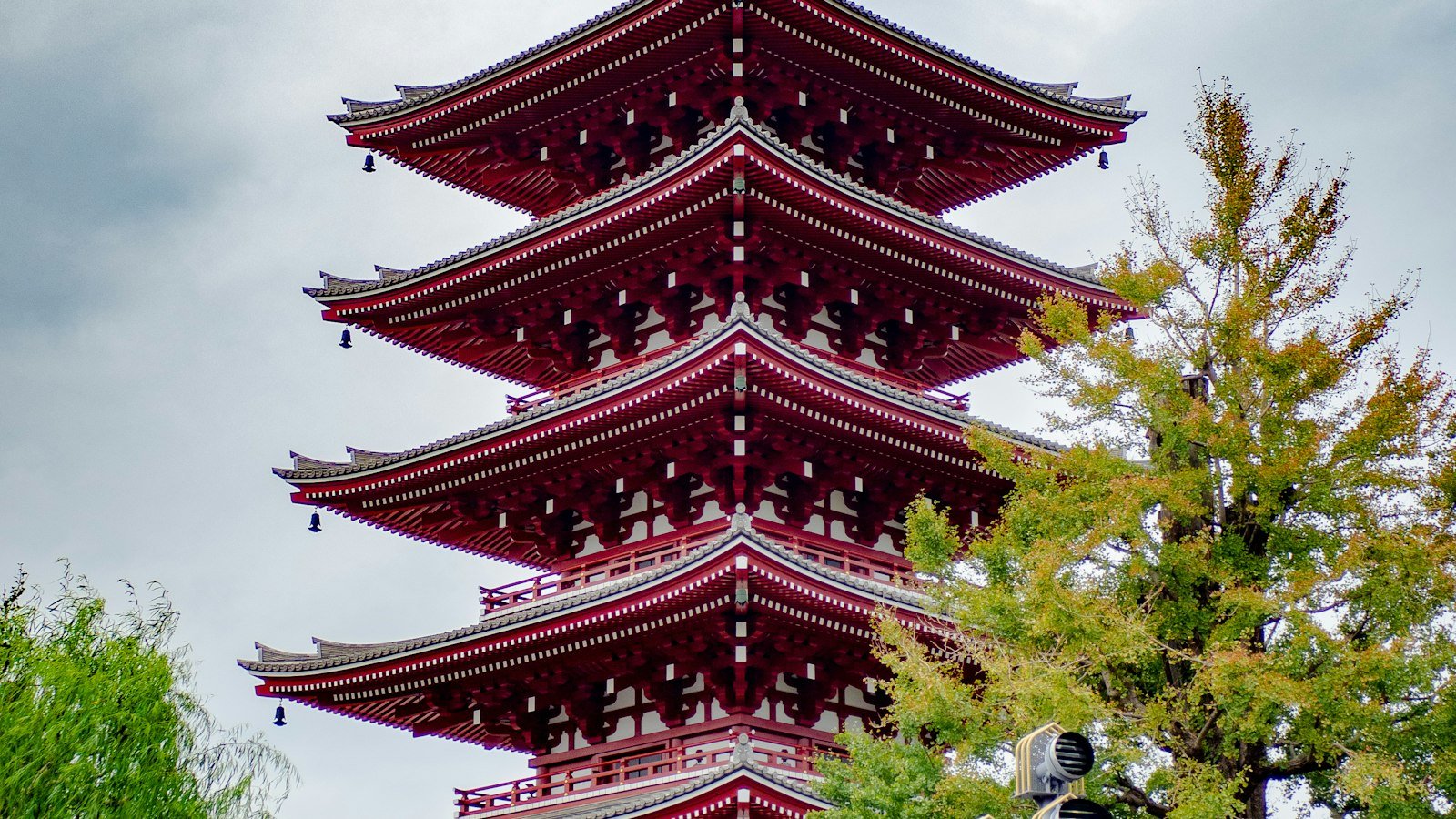
Tokyo’s oldest temple is free, the grounds never close, and the main hall opens at 6 am from April to September and 6:30 am from October to March. At 7:30 am the approach through the Kaminarimon gate and up Nakamise, the souvenir street, is almost empty; by 10 am it is one of the most crowded hundred metres in Japan. Walk through the main hall, find the five-storey pagoda on the left, then eat a convenience-store onigiri on the river terrace at Sumida Park, which has the best free view of the Skytree across the water.
11:00 am: Ueno Park and the Tokyo National Museum
The Ginza line runs from Asakusa to Ueno in three stops. Ueno Park holds a cluster of museums, a zoo and, in spring, the city’s most famous cherry trees. On a first trip the one to go inside is the Tokyo National Museum: ¥1,000 (about $6 / £5) for adults as of October 2026, free under 18 and over 70, open 9:30 am to 5 pm, closed Mondays. The Honkan building is the one to do: samurai armour, swords, kimono and Buddhist sculpture on two floors, 90 minutes without rushing. Skip the special exhibitions unless one grabs you; they cost extra and queue separately.
1:00 pm: lunch at Ameyoko, then Yanaka on foot
Lunch is at Ameya-Yokocho, the loud, cheap market street under the railway south of Ueno station: seafood over rice or skewers from a standing counter. Then walk north through Yanaka cemetery, a long avenue of cherry trees and stone, into Yanaka itself: the part of central Tokyo that survived both the great earthquake and the wartime bombing, so it still has wooden houses, small temples and cats. Aim for Yanaka Ginza, a short street of croquette stands and old-fashioned sweet shops, and be on the steps at its east end, known locally as the sunset stairs, as the light goes. Nippori station, on the Yamanote line, is five minutes from there.
6:30 pm: dinner in Ueno or back at base
Ueno has izakaya pubs on every street behind the station and you will not need a reservation on a weeknight. In Asakusa, the open-fronted bars of Hoppy Street, west of the temple, do the same job. Early night: Day 2 starts at the shrine.
Day 2: Meiji Shrine, Harajuku, Shibuya and Shinjuku
Day 2 is the west side, strung along four stops of the Yamanote line, and the only day with a fixed afternoon appointment. Book Shibuya Sky before you fly, for a slot starting about an hour before sunset: around 3:30 pm from November to January, nearer 6 pm in summer. Everything else arranges itself around it.
9:00 am: Meiji Jingu
Meiji Jingu is free, opens at sunrise and closes at sunset, which in October means 5:40 am to 4:40 pm. Enter under the great torii beside Harajuku station and walk the ten-minute gravel avenue through a forest planted by hand a century ago; the traffic noise disappears within a minute. The shrine itself takes half an hour. On weekend mornings you will often see a wedding procession cross the courtyard, the best free spectacle in Tokyo.
10:30 am: Takeshita Street and Omotesando
Back at the station, Takeshita Street is directly opposite: a few hundred metres of crepe stands, teenage fashion and the longest queue in Tokyo for a doughnut. Do it now, before 11 am, while it is walkable; by early afternoon it is a shuffle. Then turn on to Omotesando, the avenue of flagship stores, and cut into the back lanes of Ura-Harajuku for coffee and a ramen or tonkatsu lunch.
1:30 pm: walk to Shibuya
Rather than take the train one stop, walk Cat Street, the pedestrian lane that runs 20 minutes from Omotesando to Shibuya through vintage shops and cafés. You arrive at Miyashita Park, a shopping complex with a lawn on its roof, five minutes from the scramble crossing. Cross it once, then watch it from the raised walkway on the station side.
4:00 pm: Shibuya Sky (book this one)
The open rooftop of Shibuya Scramble Square, directly above the station, is the view of Tokyo we would choose over the Skytree: the city on every side, the crossing straight below, Mount Fuji on a clear winter afternoon. As of October 2026 an adult ticket bought online is ¥2,700 (about $17 / £13) for entry before 3 pm and ¥3,400 (about $22 / £16) from 3 pm; the counter charges ¥300 more, and once the online allocation is gone the counter has nothing either. Sunset slots go first, often weeks ahead. Open 10 am to 10:30 pm, last entry 9:20 pm. No luggage, tripods or selfie sticks on the roof, which closes in strong wind or rain with no refund, so if the forecast is bad, swap this for the free observatory on Day 5.
6:30 pm: Shinjuku, Omoide Yokocho and Golden Gai
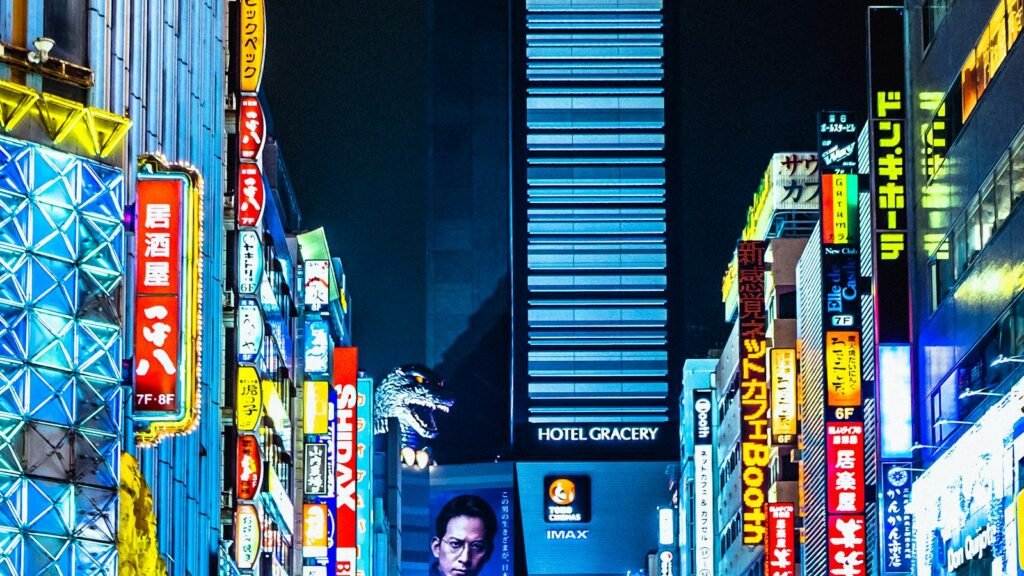
Seven minutes north on the Yamanote line is Shinjuku. Leave by the west exit and Omoide Yokocho, two alleys of eight-seat yakitori counters under the tracks, is in front of you; take a free stool and point at the skewers. Then cross east to Golden Gai, six lanes of tiny bars that open from 7 or 8 pm; cover charges are posted on the doors and the bars that welcome tourists say so in English. Most close on Sundays. Ignore the touts in Kabukicho on the way. For a quieter night with a washing machine in the room, Tokyu Stay Shinjuku Eastside is two minutes from Higashi-Shinjuku station on the calm side of the district.
Day 3: teamLab Planets, Tsukiji and Ginza
Day 3 is the modern city and the bay, and it runs in one direction, south to north: art on reclaimed land at Toyosu, lunch at the old fish market, an afternoon in Ginza and the red-brick station. We have left Odaiba and Tokyo Tower out on purpose.
9:00 am: teamLab Planets (book this one)
Of the two teamLab venues, Planets is the one for a first visit: you go barefoot, wade knee-deep through a room of water full of projected koi, and lie under a ceiling of flowers. It is a minute from Shin-Toyosu station on the Yurikamome line, or ten minutes on foot from Toyosu on the Yurakucho line. Tickets are timed, sold through the official ticket store and not at the door; the adult price is dynamic and started at ¥3,800 (about $24 / £18) when we checked in October 2026, with ages 13 to 17 at ¥2,800 and 4 to 12 at ¥1,500. Book the first slot, wear trousers that roll above the knee, and allow two hours; lockers and towels are free. The venue is scheduled to close at the end of 2027, so it is not one to save for next time.
11:30 am: Tsukiji Outer Market for lunch
From Toyosu, the Yurakucho line to Shintomicho and a ten-minute walk, or a short taxi, gets you to Tsukiji. The wholesale fish market has moved to Toyosu, but the Outer Market of several hundred shops stayed, and 9 am to 2 pm is when it is open to the public. Eat standing: tamagoyaki on a stick, grilled scallops, tuna over rice. Most shops take cash only, and many close on Sundays and some Wednesdays, so if Day 3 lands on a Sunday, swap it with Day 4.
1:30 pm: Ginza
Walk 15 minutes north-west into Ginza, Tokyo’s smartest shopping district. The things worth your time cost nothing: the basement food halls of the department stores, the stationery floors of Itoya, and the rooftop garden on Ginza Six. On weekend afternoons the main avenue is closed to cars. If you want to sleep here, MUJI Hotel Ginza, above the brand’s flagship store three minutes from Ginza station, books out early; Mitsui Garden Hotel Ginza Tsukiji has a public bath and is a short walk from the market.
4:00 pm: Tokyo Station and Marunouchi
Ten minutes further north is Tokyo Station. See the restored red-brick facade from the Marunouchi side and the tree-lined Marunouchi Naka-dori behind it, then eat in the station basement, where Ramen Street is the easy dinner, or in the yakitori alleys under the tracks at Yurakucho, one stop south, which is the local choice.
Day 4: Kamakura day trip
Every first Tokyo trip should leave the city once, and Kamakura is the trip to take: an hour by ordinary train, a giant bronze Buddha, hillside temples, a one-carriage tram along the coast and the Pacific at the end of it. It costs a fraction of a Fuji tour and does not need a clear sky.
8:30 am: train from Tokyo or Shinjuku
From Tokyo Station the JR Yokosuka line reaches Kamakura in just under an hour for ¥1,040 (about $6.60 / £4.90) each way, tapped on your Suica; from Shinjuku the Shonan-Shinjuku line takes about an hour for the same fare, though only the Zushi-bound trains run through without a change at Ofuna. Leave after 8:30 am to miss the commuter crush on the platforms.
9:45 am: the Enoden to Hase and the Great Buddha
At Kamakura, change to the Enoden, the small green railway that runs between back gardens to the sea. The Noriorikun one-day pass is ¥800 (about $5 / £3.80) from the station machines and covers unlimited rides. Get off at Hase, the third stop, and walk ten minutes to Kotoku-in, where the Great Buddha has sat in the open air for centuries, the hall that once covered it long gone. Admission is ¥300 (about $1.90 / £1.40), plus ¥50 to step inside the hollow statue; it opens at 8 am and closes at 5 pm from October to March, 5:30 pm from April to September. Before 10:30 you will have it mostly to yourself.
11:15 am: Hasedera
Five minutes back towards the station is Hasedera, ¥400 (about $2.50 / £1.90), open 8 am to 5 pm from July to March and until 5:30 pm from April to June. It climbs a hillside in terraces: a cave shrine at the bottom, a hall holding a towering gilded Kannon in the middle, and at the top a terrace looking over the rooftops to Sagami Bay. The hydrangea paths are why it is mobbed in June; in autumn it is calm.
12:30 pm: lunch, then the Enoden to the sea
Eat at one of the shirasu (whitebait) rice-bowl places between Hase station and the temple, then ride the Enoden west. The line runs along the beach, and a seat on the left, facing forward, gives you the sea and, on clear days, Enoshima island with Mount Fuji behind it. Get off at Enoshima for the island and its cliff-top shrine, which adds two hours and a lot of steps; otherwise ride to the end and come back.
3:30 pm: Komachi-dori and Tsurugaoka Hachimangu
Back in Kamakura, Komachi-dori is the lane of snack stands and craft shops running from the station to Tsurugaoka Hachimangu, the city’s main shrine. Both are free. Be on a Tokyo-bound train by 5:30 pm to be back for dinner.
Day 5: Shinjuku Gyoen, then your choice
9:30 am: Shinjuku Gyoen
Shinjuku Gyoen is the best garden in the city and the best place to recover from four days of pavement: a Japanese stroll garden, a formal French avenue and a wide English lawn, ten minutes’ walk from Shinjuku station’s south exit. Entry is ¥500 (about $3.20 / £2.40) as of October 2026, free for under-16s. It opens at 9 am and the gates close at 4:30 pm in winter, later in summer; closed Mondays, except from 1 to 15 November, when it opens daily for the chrysanthemum exhibition. Allow 90 minutes.
11:30 am: the free view from the Tokyo Metropolitan Government Building
Cross to the west side of Shinjuku station, 15 minutes on foot, to the twin-towered city hall. Its two tower-top observatories are free and open 9:30 am to 10 pm; the north deck closes at 5:30 pm and shuts on the second and fourth Mondays, the south on the first and third Tuesdays, so one is always open. On a clear winter day Fuji is straight ahead. After dark, a free projection-mapping show runs on the tower face every half hour, from 5:30 pm in the winter months. Lunch is in the basement of any surrounding skyscraper, with the office workers.
2:00 pm: pick one
- Shimokitazawa: a few minutes from Shinjuku on the Odakyu line, a low-rise district of vintage clothes, record shops and curry houses. The right choice if you liked Yanaka more than the crossing.
- Akihabara: electronics, anime and retro-game shops stacked eight floors high. Best on a Sunday afternoon, when the main street is closed to traffic from 1 pm. Go for two hours, not five.
- The Ghibli Museum in Mitaka, west of Shinjuku on the Chuo line, only if you already hold a ticket. Entry is ¥1,000 (about $6.30 / £4.70) for adults, by advance reservation only; tickets for each month go on sale at 10 am Japan time on the 10th of the previous month through the museum’s official page and its Lawson Ticket partner, and nothing is sold at the door. Hours are 10 am to 6 pm.
- Tokyo Skytree: the tower you have been looking at since Day 1. The Tembo Deck at 350 metres is ¥2,100 (about $13 / £10) for adults on weekdays and ¥2,300 on weekends and holidays as of October 2026; the combo adding the 450-metre Galleria is ¥3,100 and ¥3,400. Open 10 am to 9 pm, last entry 8 pm. Honest view: if you did Shibuya Sky, the deck here is higher but the city looks flatter from it, and the trip east costs an hour.
Getting around Tokyo in 2026: Suica, subway tickets and the airports
Tokyo’s trains are the reason this itinerary works and the reason it can wreck you if you fight them. Two rules: never change lines more than once if you can avoid it, and stay off the system in the morning and evening rush.
Suica. Get a Welcome Suica at the airport, or add the Welcome Suica Mobile app before you fly. It is a tap card valid for 28 days, good on every train, subway, bus and monorail in the region and at convenience stores. Each person needs their own. Fares inside the centre are mostly ¥180 to ¥260 a ride.
The Tokyo Subway Ticket. Unlimited rides on all Tokyo Metro and Toei subway lines for 24, 48 or 72 hours, sold to overseas visitors through the Tokyo Metro site. As of October 2026 it costs ¥1,000, ¥1,500 and ¥2,000, a rise from the ¥800, ¥1,200 and ¥1,500 most guides still quote. It does not cover JR lines, which rules out the Yamanote loop, so it suits Days 1 and 3 of this plan more than Day 2.
| Fare (October 2026) | Price | Roughly in USD / GBP |
|---|---|---|
| Tokyo Subway Ticket, 24 hours | ¥1,000 | $6.30 / £4.70 |
| Tokyo Subway Ticket, 48 hours | ¥1,500 | $9.50 / £7.10 |
| Tokyo Subway Ticket, 72 hours | ¥2,000 | $12.70 / £9.50 |
| Narita Express to Tokyo Station, one way | ¥3,140 | $19.90 / £14.90 |
| Narita Express to Shinjuku, Shibuya or Shinagawa, one way | ¥3,330 | $21.10 / £15.80 |
| N’EX Tokyo Round Trip Ticket (foreign passports, 14 days) | ¥5,200 | $32.90 / £24.60 |
| JR train Tokyo or Shinjuku to Kamakura, one way | ¥1,040 | $6.60 / £4.90 |
| Enoden one-day pass (Noriorikun) | ¥800 | $5.10 / £3.80 |
From Narita. The Narita Express runs direct to Tokyo Station in about an hour and on to Shinagawa, Shibuya and Shinjuku. Standard one-way fares are ¥3,140 to Tokyo and ¥3,330 to Shinjuku, but holders of non-Japanese passports can buy the N’EX Tokyo Round Trip Ticket for ¥5,200, valid 14 days to any of those stations, which beats two singles if you fly out of Narita too. The Keisei Skyliner reaches Ueno in 36 to 41 minutes and is the better choice for an Asakusa or Ueno base. Neither needs booking in advance outside Golden Week, but check your date: JR East has the Narita Express suspended from 6 to 8 November 2026 for engineering works.
From Haneda. Much closer: the Keikyu line reaches Shinagawa, on the Yamanote loop, in under 20 minutes, and the Tokyo Monorail reaches Hamamatsucho in about the same, both on Suica. If you can choose your flight, choose Haneda.
Accommodation tax and what hotels cost
Accommodation tax. Tokyo’s lodging tax is per person per night and still small: nothing on rooms under ¥10,000 a head, ¥100 from ¥10,000 to ¥14,999 and ¥200 at ¥15,000 and above, collected by the hotel at check-in. From April 2027 the Tokyo Metropolitan Government replaces this with 3 per cent of the room rate on anything above ¥13,000 per person per night, and private rentals, currently exempt, come into the net. On a ¥30,000 double that means ¥900 a night instead of ¥400. Booking sites usually leave it out of the headline price.
Hotels. A weekly price index sampled on 20 October 2026 for a two-night stay in mid November put median nightly rates for a double at about $213 (about ¥33,700 / £160) in Shinjuku, $230 in Ueno, $262 in Asakusa, $272 in Shibuya and $339 in Ginza, with Ikebukuro at $211 and Yanaka, the cheapest area ranked, at $168. Mid January to early March and June are markedly cheaper; for cherry blossom and Golden Week, book four to six months ahead on a refundable rate. For a late Narita arrival and an early Day 1, APA Hotel Keisei Ueno-Ekimae is a minute from the Skyliner terminal and three subway stops from Senso-ji. Our guide to how far ahead to book has the data on when rates move.
What we’d change
Four days only: drop Day 5 and move Shinjuku Gyoen to the morning of Day 2, before Meiji Jingu; both are on the same side of the city and the garden opens at 9 am. Skip the Skytree without guilt.
You want Mount Fuji: swap Kamakura for a Kawaguchiko day from Shinjuku, and accept the risk. Fuji hides in cloud more days than not between April and September; from late autumn to February the odds are good. Check the webcams the night before and keep Kamakura as the fallback.
FAQ
Is five days enough for Tokyo?
For a first visit, yes, with a day trip included. Four full days cover the main districts; the fifth is what stops the trip feeling like a checklist. A week adds Nikko or Hakone, not more of the centre.
Which tickets do I really need to book in advance?
Shibuya Sky, because the afternoon slots sell out and the counter cannot help once they have. teamLab Planets, because it is not sold at the door. The Ghibli Museum, because it is advance-only and goes within hours of release. The National Museum, Shinjuku Gyoen, the Skytree and everything in Kamakura can be bought on the day.
Shibuya Sky or Tokyo Skytree?
Shibuya Sky. It is open to the air, it is in the middle of the city rather than at its edge, and at ¥2,700 it is cheaper than the Skytree combo. The Skytree wins only if the weather closes the rooftop, or if you are staying in Asakusa and can walk there at dusk.
Where should I stay for this itinerary?
Shinjuku, for the Yamanote line, the Kamakura train and the Day 2 and Day 5 evenings on foot. Asakusa is the budget alternative and makes Day 1 effortless, at the cost of an hour’s travel on Day 2. The breakdown is in our Tokyo where-to-stay guide.
How we researched this: opening hours, ticket prices and fares were checked in October 2026 against the official sites of the Tokyo National Museum, Meiji Jingu, Shinjuku Gyoen, Tokyo Skytree, the teamLab Planets ticket store, the Ghibli Museum, Tsukiji Outer Market, Kotoku-in, Hasedera and the Enoden railway, JR East’s Narita Express and Welcome Suica pages, Tokyo Metro’s Tokyo Subway Ticket page, Japanese press reports on the Tokyo accommodation tax changes, a weekly Tokyo hotel-price index, and recent itineraries from independent Tokyo-based writers. Prices and hours change; confirm before you travel.
Leave a Reply