Last updated: 30 October 2026. This guide contains affiliate links; if you book through one we may earn a commission at no extra cost to you. How we make money.
Short answer: three days covers the Kyoto most people come for, provided you are out of the door by 6:30 am and treat the buses as a last resort. Spend Day 1 on the Higashiyama hillside and in Gion, Day 2 in Arashiyama with Fushimi Inari at dusk, and Day 3 across the north from the Golden Pavilion to the Philosopher’s Path. Nara, 35 to 45 minutes away by train, is the add-on day, and this guide gives it a full plan. Two things to know before you book anything: the temples open early and shut around 5 pm, so the day is front-loaded, and from 1 March 2026 Kyoto’s accommodation tax is charged per person per night on a sliding scale that reaches ¥10,000 on the most expensive rooms.
At a glance
| Day | Area | Theme |
|---|---|---|
| Day 1 | Southern Higashiyama, Downtown, Gion | Kiyomizu-dera at dawn, the stone lanes, Nijo Castle, Gion at dusk |
| Day 2 | Arashiyama, then Fushimi | Bamboo grove before the crowds, Tenryu-ji, monkeys, torii gates at sunset |
| Day 3 | Northern Kyoto and Northern Higashiyama | Kinkaku-ji, Ryoan-ji, Nanzen-ji, the Philosopher’s Path, Ginkaku-ji |
| Day 4 (optional) | Nara | The Great Buddha, 1,000-plus deer, Kasuga Taisha’s lanterns |
The practical bit
- Best months: late March to May and October to early December. The 2026 autumn colour is forecast to peak between 19 and 29 November, when hotel prices roughly double over the 21 to 23 November holiday weekend. January and June are the quiet, cheap months.
- Pace: early and steady. Every day starts between 6:00 and 8:30 am at the one sight that is ruined by crowds, then eases off. Expect 12 to 15 kilometres on foot a day.
- Tickets and transport per person: about ¥3,400 on Day 1, ¥3,400 on Day 2 and ¥3,800 on Day 3 at October 2026 prices, so roughly ¥10,600 (about $68 / £51) for three days. The Nara day adds about ¥3,200 (about $20 / £15). Food and hotels are extra.
- Book ahead: very little. No temple in this plan sells timed tickets. Book your hotel months out for April and November, reserve any kaiseki dinner, and buy the discounted HARUKA airport ticket before you fly if you are arriving at Kansai.
- Carry cash: temple ticket windows, the deer-cracker sellers in Nara and many small restaurants still take only yen.
In this guide
- Day 1: Kiyomizu-dera, the Higashiyama lanes, Nijo Castle and Gion
- Day 2: Arashiyama early, Fushimi Inari late
- Day 3: the Golden Pavilion to the Philosopher’s Path
- The Nara day trip
- Getting around Kyoto in 2026: fares, passes and the bus problem
- Accommodation tax, airport transfers and what hotels cost
- What we’d change
- FAQ
Day 1: Kiyomizu-dera, the Higashiyama lanes, Nijo Castle and Gion
Day 1 is the Kyoto of the photographs, done in the only order that works: the hillside temple at opening, the stone lanes while the shops are still shuttered, a castle in the afternoon when the tour groups have moved on, and Gion in the hour before dinner when the lanterns come on.
Base yourself in Downtown, around the Shijo and Kawaramachi crossroads. It is flat, it sits on the subway and two private rail lines, and Gion is a ten-minute walk across the river. Cross Hotel Kyoto is the mid-range hotel we recommend most often here, a short walk from both Gion-Shijo and Kawaramachi stations with properly sized rooms. If the budget is tighter, Hotel Forza Kyoto Shijo Kawaramachi is a quiet, modern business hotel a few minutes from the same crossing at roughly half the price. The full breakdown by neighbourhood, including the areas to avoid, is in our Where to Stay in Kyoto guide.
6:30 am: Kiyomizu-dera
Kiyomizu-dera opens at 6:00 am all year, which is the single most useful fact in this guide. Arrive between 6:30 and 7:00 and you share the wooden stage and its view over the city with a few dozen people; arrive at 10:00 and you share it with several thousand. Admission is ¥500 (about $3.20 / £2.40) as of October 2026, paid in cash at the gate. The temple closes at 6:00 pm, 6:30 pm in July and August. Allow an hour for the main hall, the loop past the Koyasu pagoda, which gives you the classic view back at the stage, and the Otowa waterfall at the bottom. The temple’s 2026 calendar lists a special night opening from 21 to 30 November, with entry until 9:00 pm; if your dates line up, come back after dark.
Getting there: bus 206 from Kyoto Station takes about 15 minutes to the Gojo-zaka stop for ¥230 (about $1.45 / £1.10), then a ten-minute uphill walk. From Downtown, take the Keihan line to Kiyomizu-Gojo and climb for 20 minutes. At this hour the buses are empty; at 10:00 am they leave full.
8:00 am: Sannenzaka, Ninenzaka and the Yasaka Pagoda
Leave through the shop street below the temple and turn right down the stone steps of Sannenzaka, then Ninenzaka. These two preserved lanes of wooden machiya are the most photographed streets in Kyoto, and at 8:00 am they are nearly empty because the shops do not open until 9:00 or 10:00. The five-storey Yasaka Pagoda stands at the bottom of the slope; the view back up the lane towards it is the shot everyone wants. The steps are worn and slippery when wet, and this is the one stretch where you should look at your feet rather than your phone.
9:00 am: Kodai-ji
Two minutes from the pagoda, Kodai-ji opens at 9:00 am and is the quiet counterpoint to Kiyomizu: a garden of raked gravel and a pond, a bamboo path and two teahouses, built in 1606 by the widow of the warlord Hideyoshi. Entry is ¥800 (about $5.10 / £3.85), which includes the small Sho Museum across the road; a ¥1,200 ticket adds the Entoku-in subtemple, which is for a second visit. The garden is lit for special evening openings in spring and autumn. Allow 45 minutes.
10:00 am: Yasaka Shrine and Maruyama Park
Walk north through Maruyama Park, Kyoto’s oldest public park and its cherry-blossom headquarters in early April, to Yasaka Shrine, the big orange-and-white shrine at the top of Shijo Street. It is free and always open, and its lantern-hung dance stage is the city’s most casual landmark; people cut through it on the way to work. From here Shijo Street runs straight west across the Kamo river into Downtown, which is where lunch is.
11:00 am: Nishiki Market for an early lunch
Twenty minutes along Shijo and one block north is Nishiki Market, five covered blocks of more than a hundred shops selling pickles, dried fish, knives, grilled eel and skewers of everything. Shops run roughly 10:00 am to 6:00 pm, with many closed on Wednesdays or Sundays, and the crowd is thinnest before 10:00 or after 4:30 pm; arriving at 11:00 you are ahead of the lunch surge. Eating while walking is frowned on here, so eat at the stall or at one of the standing counters. Budget ¥1,500 to ¥2,500 for a lunch assembled from four or five stalls.
1:30 pm: Nijo Castle
Take the Tozai subway line from Karasuma Oike, two blocks north of the market, one stop west to Nijojo-mae; the castle gate faces the exit. Nijo Castle is where the Tokugawa shoguns stayed when they visited the emperor, and the Ninomaru Palace is the point: six connected halls of painted screens and the famous nightingale floors that chirp as you walk. Admission to the grounds is ¥800; the combined ticket with the Ninomaru Palace is ¥1,300 (about $8.30 / £6.25) and is the one to buy, with reduced prices for school-age children and free entry under elementary age, according to the castle’s official fee page. The castle is open 8:45 am to 4:00 pm for entry and closes at 5:00. The Ninomaru Palace shuts on Tuesdays in January, July, August and December, and the whole castle closes 29 to 31 December. Photography is banned inside the palace. Allow 90 minutes, including the gardens and the Honmaru walls.
4:00 pm: the Kamo river and Pontocho
Ride the Tozai line back east to Kyoto Shiyakusho-mae and walk down to the Kamo river at Sanjo bridge. The riverbanks between Sanjo and Shijo are where the city sits in the late afternoon, evenly spaced along the water in a way visitors find faintly comic. Pontocho, the lantern-lit alley one block west of the river, runs between the two bridges; its restaurants open around 5:00 pm, and from May to September many build kawayuka platforms out over the water. Pick one and reserve a table for 7:30 pm.
5:00 pm: Gion
Cross the Shijo bridge into Gion for the hour before dusk, when the teahouses on Hanamikoji light their lanterns and geiko and maiko walk to their evening appointments. Hanamikoji, the main street south from Shijo to Kennin-ji temple, is open as it always has been. The small private lanes off it have been closed to visitors since April 2024, with no-entry signs in four languages, and photographing a geiko or maiko without consent has been banned since 2019, with fines of up to ¥10,000 posted. If you see one, step aside and let her pass. Then walk north of Shijo to Shirakawa, the quieter canal street with willows and stone bridges, which is the prettier of the two. Dinner in Pontocho at 7:30.
Day 2: Arashiyama early, Fushimi Inari late
Arashiyama and Fushimi Inari sit on opposite sides of the city, and both are wrecked by crowds in the middle of the day. The fix is to use their hours: the bamboo grove is a public path with no gate, and Fushimi Inari is open around the clock, so you do one at dawn and the other at dusk, with Kyoto Station as the hinge between them. Everything on this day runs on JR lines, which makes it the one day a Japan Rail Pass earns its keep.
7:00 am: the bamboo grove
Take the JR Sagano line from Kyoto Station to Saga-Arashiyama, 15 minutes and ¥240 (about $1.50 / £1.15), then walk ten minutes west. The bamboo grove is a short path between Tenryu-ji’s north gate and the Okochi Sanso villa, and it is free and unfenced. At 7:00 am it is already moderately busy with photographers; by 10:00 it is a shuffling queue. Walk it slowly once, then come back through it later from the other direction when you leave Okochi Sanso.
8:30 am: Tenryu-ji
Tenryu-ji, the head temple of its Zen sect and a World Heritage Site, opens at 8:30 am. The garden ticket is ¥500 and the buildings cost ¥300 on top (about $5.10 / £3.85 for both); buy both and go into the hall first, because the garden was designed to be looked at from its veranda, with the pond in the foreground and the Arashiyama hills borrowed as the backdrop. Many visitors who shrug at the bamboo grove come away calling this the best hour of their trip. Leave through the north gate, which puts you back in the grove. Last entry 4:50 pm.
10:00 am: Okochi Sanso
At the top of the grove, the gate on the left leads into Okochi Sanso, the hillside villa and garden built over 30 years by the silent-film actor Denjiro Okochi. Entry is ¥1,000 (about $6.35 / £4.80) and includes a bowl of matcha and a sweet in the teahouse, which makes it the best-value ticket in Arashiyama. The paths climb through maples and moss to a terrace with a view across the city; allow an hour. Open 9:00 am to 5:00 pm.
11:30 am: Togetsukyo bridge and lunch
Walk back down through the grove and the shopping street to the river. The Togetsukyo bridge, Arashiyama’s postcard, has the forested hills behind it, and the riverside park on the near bank is the place to sit. Restaurants on the main street between the station and the bridge fill from noon, so eat at 11:30 or take something to the river. The local speciality is yudofu, simmered tofu, better than it sounds.
1:00 pm: Iwatayama Monkey Park
Cross the bridge and the entrance to the monkey park is on the right. It is a ten-minute uphill hike to a clearing where a troop of Japanese macaques roams free while you feed them from inside a wire hut, which is the correct way round. The view over the whole of Kyoto from the top is the best in the west of the city. Entry is ¥800 (about $5.10 / £3.85), open 9:00 am to 4:30 pm with last entry at 4:00, and it closes in heavy rain or snow. Allow 75 minutes including the climb. Not for pushchairs.
3:30 pm: across the city to Fushimi
Walk back to Saga-Arashiyama and take the Sagano line to Kyoto Station, 15 minutes. Change to the JR Nara line and ride two stops to Inari, five minutes and ¥150 (about $0.95 / £0.72); the shrine’s first gate is directly opposite the station exit.
4:30 pm: Fushimi Inari Taisha
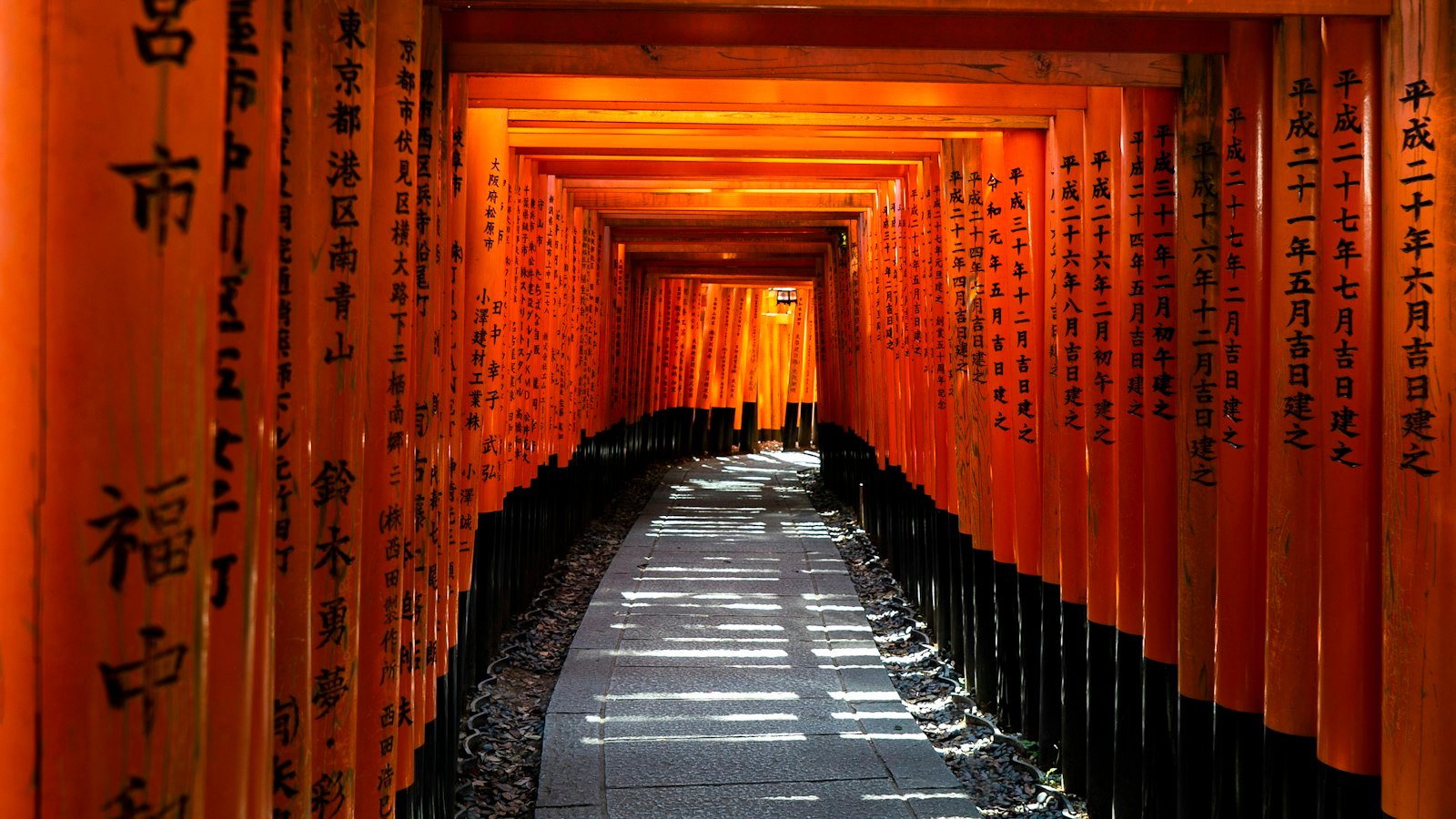
Fushimi Inari is the shrine of the thousands of orange torii gates, and it is free and never closes. The famous twin tunnels of gates start just behind the main hall, and this is where most visitors stop. Keep climbing. The gates continue up the wooded mountain, and after 30 to 45 minutes you reach the Yotsutsuji intersection, where the path loops and the view opens over southern Kyoto. Time it for sunset. The full circuit to the summit and back takes two to three hours; Yotsutsuji is the natural turning point. The gates are lit after dark, and walking down through them at dusk with the crowds gone is the best half-hour of the three days. Bring a torch for the upper paths if you stay past 6:00 pm.
Dinner: the stalls between the station and the shrine sell inari sushi and grilled skewers but close early. For a proper meal, ride the Keihan line from Fushimi-Inari station, five minutes’ walk from the shrine, back to Gion-Shijo.
Day 3: the Golden Pavilion to the Philosopher’s Path
Day 3 crosses the north of the city from west to east: two Zen temples in the north-west that everyone visits, then the greener and emptier temples of Northern Higashiyama joined by a canal-side walk. It is the day for the Subway & Bus 1-Day Pass, because you will take four or five rides and the ¥1,100 pass pays for itself on the fifth.
9:00 am: Kinkaku-ji
Kinkaku-ji, the Golden Pavilion, opens at 9:00 am and you want to be at the gate for it; the viewing path around the pond is one-way and narrow, and by 10:30 it moves at the pace of the slowest selfie. Admission is ¥500 (about $3.20 / £2.40). The pavilion itself, two floors of it covered in gold leaf, cannot be entered, so the visit is 40 minutes of walking the garden loop. It photographs best in the morning when the sun is behind you and the pond is still.
Getting there: bus 205 runs directly from Kyoto Station in about 40 minutes for ¥230, but at 8:15 am it is standing room. The faster route is the Karasuma subway line to Kitaoji, 15 minutes and ¥260, then bus 204 or 205 for ten minutes, or a taxi for about ¥1,500.
10:15 am: Ryoan-ji
Ryoan-ji is a 20-minute walk or a five-minute bus ride west of Kinkaku-ji, and holds the most famous rock garden in Japan: fifteen stones on raked white gravel inside a low clay wall, arranged so that you can never see all fifteen at once from the veranda. Entry is ¥600 (about $3.80 / £2.90), open 8:00 am to 5:00 pm from March to November and 8:30 to 4:30 in winter. Most people sit for ten minutes and leave; sit for twenty, then walk the loop around the large pond below, which almost nobody does. Allow an hour in total.
12:00 pm: across to Nanzen-ji for lunch
Now cross the city. Bus 204 or 205 back to Kitaoji, the Karasuma line south to Karasuma Oike, then the Tozai line east to Keage; allow about 45 minutes door to door, and buy a bento at Kitaoji station if you want to eat in the temple grounds. From Keage it is a five- to ten-minute walk to Nanzen-ji, through the short brick tunnel under the old incline. The yudofu restaurants beside the temple are the classic lunch here and charge accordingly; the ones nearer the station are cheaper.
1:00 pm: Nanzen-ji
Nanzen-ji’s grounds are free, and the two things most people come for cost nothing: the vast wooden Sanmon gate, and the red-brick Meiji-era aqueduct that strides through the temple precinct like something from Rome, still carrying water from Lake Biwa. Climbing to the gate’s balcony costs ¥600 (about $3.80 / £2.90) and gives the best view of the maples; the Hojo hall with its tiger screens and gardens is another ¥600. Both open 8:40 am to 5:00 pm, last entry 20 minutes before, and close 28 to 31 December. The free grounds alone are worth 40 minutes.
2:15 pm: the Philosopher’s Path
A few minutes north of Nanzen-ji the Philosopher’s Path begins: a two-kilometre stone footpath beside a cherry-lined canal, named for a Kyoto University professor who walked it daily. It takes 30 to 45 minutes to Ginkaku-ji at the northern end, longer in early April when the cherries are out or in late November when the maples turn, and it is lined with small cafes, a few shrines and shops that are easy to lose half an hour in. There is no admission; it is a residential street.
3:15 pm: Ginkaku-ji
Ginkaku-ji, the Silver Pavilion, was never silvered, which is the first thing everyone tells you. It is a dark wooden villa beside a pond, with a garden of sculpted sand, a cone of white gravel said to represent Mount Fuji, and a path that climbs through moss to a view over the roofs to the city. It is quieter and more affecting than its golden sibling. Admission is ¥1,000 (about $6.35 / £4.80), the most expensive temple in this plan, open 8:30 am to 5:00 pm from March to November and 9:00 to 4:30 in winter. Allow 45 minutes. Bus 5 or 17 from the stop at the bottom of the approach gets you back to Kyoto Station or Downtown in 35 to 40 minutes.
For the last night, consider sleeping somewhere that rewards the early start you have been making. Nohga Hotel Kiyomizu Kyoto is one of the highest-rated hotels in the city and a short walk from the Kiyomizu slopes, so a second dawn visit is on foot. If Nara is tomorrow, a room near the station makes more sense; see below.
The Nara day trip
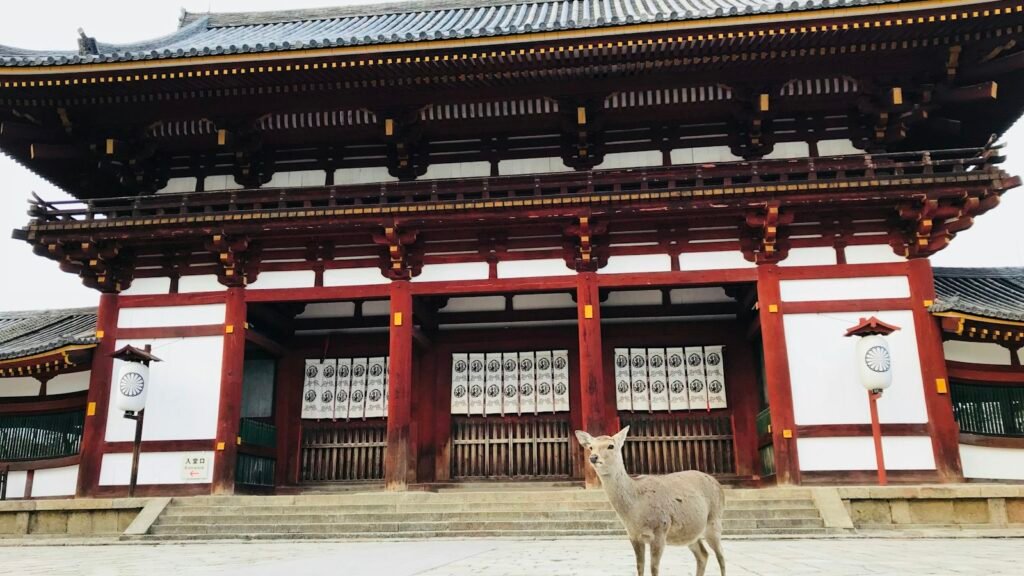
Nara was Japan’s capital before Kyoto, and its three essentials, the Great Buddha at Todai-ji, the free-roaming deer and the lantern-lined approach to Kasuga Taisha, sit within one large park a short walk from the station. Four to six hours is enough. The mistake is leaving Kyoto at noon: Todai-ji closes at 5:00 pm, 5:30 in summer.
8:30 am: train from Kyoto Station
Two companies run from Kyoto Station to Nara and they arrive at different stations. Kintetsu, from its own platforms on the south side of Kyoto Station, is the better choice without a rail pass: the express takes 45 minutes for ¥760 (about $4.85 / £3.65) and the limited express 35 minutes for ¥1,280 (about $8.15 / £6.15), and Kintetsu Nara station is a five-minute walk from the park. JR’s Miyakoji Rapid takes 45 minutes for ¥720 and is covered by the Japan Rail Pass, but JR Nara station is a 20-minute walk from the park. Kintetsu also sells a 1-day KINTETSU RAIL PASS for ¥1,900, which only pays off if you add Osaka to the same day. Suica, ICOCA and Pasmo cards work on both.
9:30 am: Nara Park and the deer
Walk east from Kintetsu Nara station and within five minutes you are among the deer, more than a thousand of them, regarded as messengers of the gods and protected as a national treasure. Vendors sell shika senbei, the rice-bran deer crackers, for around ¥200 a bundle (about $1.30 / £0.95); hold them up and some of the deer will bow before taking one. They will also nudge, nip and eat maps, so keep paper out of reach and small children’s hands above head height. You will pass Kofuku-ji’s grounds on the way; note that its five-storey pagoda is wrapped in scaffolding for a renovation running until March 2034, so do not plan the day around it.
10:15 am: Todai-ji
Todai-ji’s Great Buddha Hall, the Daibutsuden, is one of the largest wooden buildings in the world and holds a 15-metre bronze Buddha cast in the eighth century. The hall opens 7:30 am to 5:30 pm from April to October and 8:00 to 5:00 from November to March, and admission is ¥800 (about $5.10 / £3.85) for anyone 13 and over and ¥400 for children of 6 to 12, according to the temple’s admission page. A joint ticket with the Todai-ji Museum is ¥1,200. Inside, look for the wooden pillar with a hole at its base; children, and the occasional thin adult, crawl through it for luck. From the hall, walk ten minutes uphill to Nigatsudo, a free hall with a balcony over the city that is the quietest good view in Nara. Allow 90 minutes for the whole complex.
12:30 pm: lunch, then Kasuga Taisha
There is little to eat inside the park, so either take a bento from the station or walk back towards Kintetsu Nara for noodles. Then follow the forest path south-east to Kasuga Taisha, Nara’s great Shinto shrine, roughly 30 minutes’ walk from the station through an avenue of moss-covered stone lanterns under old cedars. The outer grounds are free and open 6:30 am to 5:30 pm from March to October, 7:00 to 5:00 in winter; the inner precinct with its hanging bronze lanterns costs ¥700 (about $4.45 / £3.35) and is open 9:00 am to 4:00 pm. The lanterns are lit only twice a year, in early February and mid-August, so do not expect them to be. A bus back to the station is ¥250 if your feet have had enough.
3:30 pm: Naramachi, then back to Kyoto
If there is time, Naramachi, the old merchant quarter south of Kintetsu Nara, has lattice-fronted townhouses, tea rooms and sweet shops and almost no deer. Take the Kintetsu express back and you are in Kyoto by 5:00 pm. The Thousand Kyoto, a 222-room hotel about two minutes’ walk from Kyoto Station’s central gate with a spa and large bath, is the comfortable choice for a day-trip night; Onyado Nono Kyoto Shichijo, five minutes north of the station with tatami floors throughout and a natural hot-spring bath, is the best-value one.
Getting around Kyoto in 2026: fares, passes and the bus problem
Kyoto’s two subway lines cross at Karasuma Oike and miss most of the temples, so the city runs on buses, and the 206 to Kiyomizu and Gion is often too full to board by mid-morning. The workaround used throughout this plan is to take a train to the nearest station and walk the last 15 to 20 minutes. Fares below are from the Kyoto City Transportation Bureau and the rail operators as of October 2026.
| Fare (October 2026) | Price | Roughly in USD / GBP |
|---|---|---|
| City bus, flat fare, adult | ¥230 | $1.45 / £1.10 |
| City bus, flat fare, child | ¥120 | $0.75 / £0.60 |
| EX100 express bus to Kiyomizu and Gion (weekends and holidays) | ¥500 | $3.20 / £2.40 |
| Subway & Bus 1-Day Pass, adult | ¥1,100 | $7.00 / £5.30 |
| Subway 1-Day Pass | ¥800 | $5.10 / £3.85 |
| Subway & Randen tram 1-Day Ticket (for Arashiyama) | ¥1,300 | $8.30 / £6.25 |
| JR Kyoto Station to Saga-Arashiyama | ¥240 | $1.50 / £1.15 |
| JR Kyoto Station to Inari (Fushimi Inari) | ¥150 | $0.95 / £0.72 |
| Kintetsu Kyoto to Nara, express / limited express | ¥760 / ¥1,280 | $4.85 / $8.15 and £3.65 / £6.15 |
| JR Kyoto to Nara, Miyakoji Rapid | ¥720 | $4.60 / £3.45 |
Buses take cash, the day pass and Suica, ICOCA, Pasmo or PiTaPa cards, but not credit cards and not the Japan Rail Pass. Board by the rear door and pay as you get off. The EX100 express, Kyoto Station to the Kiyomizu stop in about 12 minutes on weekends and holidays only, boards at the front and is the one bus worth seeking out. Large suitcases are officially discouraged on buses; use the luggage-forwarding counters at Kyoto Station. A Japan Rail Pass covers only the JR trains in this plan and nothing in the city.
Accommodation tax, airport transfers and what hotels cost
Accommodation tax. Kyoto’s lodging tax rose on 1 March 2026 and is now the steepest in Japan. It is charged per person per night and depends on the room rate per person: ¥200 under ¥6,000; ¥400 from ¥6,000 to ¥19,999; ¥1,000 from ¥20,000 to ¥49,999; ¥4,000 from ¥50,000 to ¥99,999; and ¥10,000 (about $64 / £48) a night on rooms of ¥100,000 or more, as published by the Kyoto City Official Travel Guide. Hotels generally collect it at check-in in cash or on a card, separately from the online price. For two people in a ¥30,000 room over three nights, budget an extra ¥6,000. It applies to hotels, ryokan and private rentals alike.
Kansai Airport to Kyoto. The JR HARUKA limited express runs direct to Kyoto Station in about 75 minutes, roughly every 30 minutes, for ¥3,060 (about $19.50 / £14.70) in a non-reserved seat. Foreign visitors on a temporary-visitor stamp can buy a discounted one-way HARUKA ticket in advance through JR West’s WEST-QR scheme: ¥2,200 for travel to 31 October 2026 and ¥2,700 (about $17 / £13) from 1 November; it cannot be bought once you are in Japan. The airport limousine bus to the south (Hachijo) exit of Kyoto Station is ¥2,800 and takes about 90 minutes with a guaranteed seat and your bags in the hold, which is the better option with children or large luggage. The cheapest route is a JR rapid train with one change at ¥1,860, taking about 100 minutes. A fixed-fare taxi starts around ¥24,100 (about $153 / £116) per car plus tolls.
Hotels. Kyoto is the most seasonal hotel market in Japan. A good central mid-range double runs ¥20,000 to ¥35,000 (about $127 to $223 / £96 to £168) in an ordinary month; business hotels sit around ¥10,500 to ¥15,000 and capsule or hostel beds at ¥4,000 to ¥6,000. November is the most expensive month: the city tourism association’s figures for November 2025 showed an average room rate of ¥29,085 (about $185 / £140) at 86.9 per cent occupancy, and listed rates for the 21 to 23 November 2026 holiday weekend were running about double. Early April is the other peak. For those weeks, book four to six months out; otherwise one to two months is enough. Mitsui Garden Hotel Kyoto Station, a short walk from the station with a top-floor public bath, is a dependable mid-range fallback when Downtown has sold out. For one night of indulgence at the end of Day 2, Suiran, a Luxury Collection Hotel sits on the river in Arashiyama with 39 rooms, 17 of them with a private open-air bath, and puts you in the bamboo grove at dawn without the train.
Combining Kyoto with Tokyo? Our five-day Tokyo itinerary is built on the same early-start principle, and Where to Stay in Tokyo covers the hotel side.
What we’d change
Three days including Nara: drop Day 3 and do Nara instead. Kinkaku-ji is the one casualty most people mind; fit it in by taking the subway to Kitaoji and bus 205 straight after Nijo Castle on Day 1, which lands you there around 3:30 pm with 90 minutes before closing. The Philosopher’s Path is the thing you lose, and it is a reason to come back.
Two days only: Day 1 as written, then Day 2 as written with Nijo Castle dropped from Day 1 to make room for a longer Gion evening. You will have seen the hillside, Gion, the bamboo and the torii, which is the Kyoto shortlist.
Late November: the foliage is forecast to peak from 19 to 29 November 2026, with Tenryu-ji first and Kiyomizu-dera around the 25th. Add Tofuku-ji, ten minutes’ walk from Tofukuji station on the JR Nara line, on your way to Fushimi Inari on Day 2: its Tsutenkyo bridge over a valley of maples opens at 8:30 am from 14 November to 6 December and charges ¥1,000 in that period, and the queue starts forming before opening. Expect everything on Day 1 and Day 3 to be at least twice as busy, and book the Kiyomizu-dera night opening into your plans.
FAQ
Is three days enough for Kyoto?
Yes, for a first visit, if you start early. Three full days cover the Higashiyama temples, Gion, Arashiyama, Fushimi Inari and the northern temples without rushing. Nara needs a fourth day, or costs you the Philosopher’s Path. Kyoto has some 1,600 temples, so nobody finishes it; the point is to see the handful that matter without the crowds.
Do I need to book temple tickets in advance?
No. None of the temples in this itinerary sells timed or advance tickets; you pay in cash at the gate. The only things worth booking before you fly are your hotel, the discounted HARUKA airport ticket, and any special dinner. The exception is Nijo Castle’s Honmaru Palace, which needs an online ticket and is not in this plan.
Is the Kyoto bus pass still worth buying?
The bus-only pass no longer exists; it was withdrawn in 2023. The Subway & Bus 1-Day Pass is ¥1,100 and pays off on the fifth ride, which in this plan happens only on Day 3. On Days 1 and 2 an IC card and the trains are cheaper and faster.
Kintetsu or JR to Nara?
Kintetsu, unless you hold a Japan Rail Pass. It is the same 45 minutes for a similar fare, and Kintetsu Nara station is five minutes from the deer where JR Nara is twenty. With a pass, JR is free and the extra walk is through the town.
Can I photograph geisha in Gion?
Not without consent, and in practice not at all on the street. Photographing geiko and maiko has been banned in Gion since 2019 with fines of up to ¥10,000, and the private lanes off Hanamikoji have been closed to visitors since April 2024. Hanamikoji itself and the Shirakawa canal street are open. If you want photographs, book a maiko performance or a dressing experience, where it is welcomed.
How we researched this: opening hours, admission prices and fares were checked in October 2026 against the official websites of Kiyomizu-dera, Nijo Castle, Todai-ji, Kintetsu Railway, JR West, the Kyoto City Transportation Bureau and the Kyoto City Official Travel Guide’s accommodation-tax notice, the Japan-Guide reference pages for each temple, the WeatherNews 2026 foliage forecasts as reported in October 2026, Kyoto City Tourism Association occupancy data, current hotel rates on major booking sites, and recent itineraries from independent Kyoto-based writers. Prices and hours change; confirm before you travel.
Leave a Reply