Last updated: 23 October 2026. This guide contains affiliate links; if you book through one we may earn a commission at no extra cost to you. How we make money.
Short answer: four days is the right length for a first trip to Rome, and this plan is built around one fact: every big queue in the city has a way round it if you book the right ticket at the right time. Day 1 is ancient Rome, with the first Colosseum slot of the morning and the Trevi Fountain after dark. Day 2 is the Vatican, with an 8 am museum entry and the dome before lunch. Day 3 is the Centro Storico on foot, Pantheon first. Day 4 is the Borghese Gallery, which sells only timed two-hour slots, then the quiet side of the city on the Aventine and in Testaccio. Three tickets need booking weeks ahead: the Vatican Museums, the Colosseum and the Borghese. Everything else can be bought the night before or at the door.
At a glance
| Day | Area | Theme |
|---|---|---|
| Day 1 | Colosseum, Forum, Palatine, Capitoline, Monti, Trevi | Ancient Rome at opening time, the fountain after dark |
| Day 2 | Vatican Museums, St Peter’s, Prati, Trastevere | Sistine Chapel before the crowds, the dome, dinner across the river |
| Day 3 | Pantheon, Piazza Navona, Campo de’ Fiori, Jewish Quarter, Spanish Steps, Pincio | The historic centre on foot, one cheap ticket |
| Day 4 | Borghese Gallery, Aventine, Testaccio, Gianicolo | Bernini and Caravaggio, the keyhole, the best sunset in Rome |
The practical bit
- Best months: April to early June and mid-September to October. July and August pass 30°C by late morning and the Forum has no shade. November to February is cool, often wet and cheapest for hotels; the Colosseum closes at 4:30 pm.
- Pace: one timed anchor sight each morning, walk-up sights in the afternoon, 12 to 15 km of walking a day. The metro misses the historic centre, so your feet do most of the work.
- Tickets and transport per person: about €26 on Day 1, €35 on Day 2, €10 on Day 3 and €21 on Day 4 at October 2026 prices, roughly €92 (about $107 / £79) for four days. Add €50 to €80 a day for food, plus the hotel and the tourist tax.
- Book ahead: Vatican Museums (slots release 60 days out), Colosseum (30 days out, named tickets), Borghese Gallery (timed two-hour entry, weeks ahead in season).
- Days to watch: the Vatican Museums close on Sundays except the last of the month. The Borghese closes on Mondays. St Peter’s is largely shut on Wednesday mornings for the papal audience. The first Sunday of the month is free at the Colosseum, Pantheon and Borghese, and the queues are the worst of the year.
In this guide
- Day 1: the Colosseum, the Forum and the Trevi Fountain after dark
- Day 2: the Vatican, the dome and dinner in Trastevere
- Day 3: the Centro Storico on foot
- Day 4: the Borghese Gallery, the Aventine and Testaccio
- Getting around Rome in 2026: fares, passes and the airport
- Tourist tax and what hotels cost
- What we’d change
- FAQ
Day 1: the Colosseum, the Forum and the Trevi Fountain after dark
Day 1 is the Rome most people came for, in the one order that works: the Colosseum in its first slot, the Forum and Palatine while the tour groups are still queuing for the amphitheatre, lunch in Monti, a free terrace in the afternoon, and the Trevi Fountain when the day-trippers have gone.
Base yourself in the Centro Storico or Monti. The Centro Storico puts Days 1, 3 and 4 within a 25-minute walk; Albergo del Senato, with a roof terrace facing the Pantheon, is the best-placed mid-range hotel in the city. Monti is cheaper and ten minutes from the Colosseum; Hotel Grifo is a family-run three-star near Cavour metro. The breakdown by neighbourhood, with the areas to avoid, is in our Where to Stay in Rome guide.
8:30 am: the Colosseum, first slot of the day
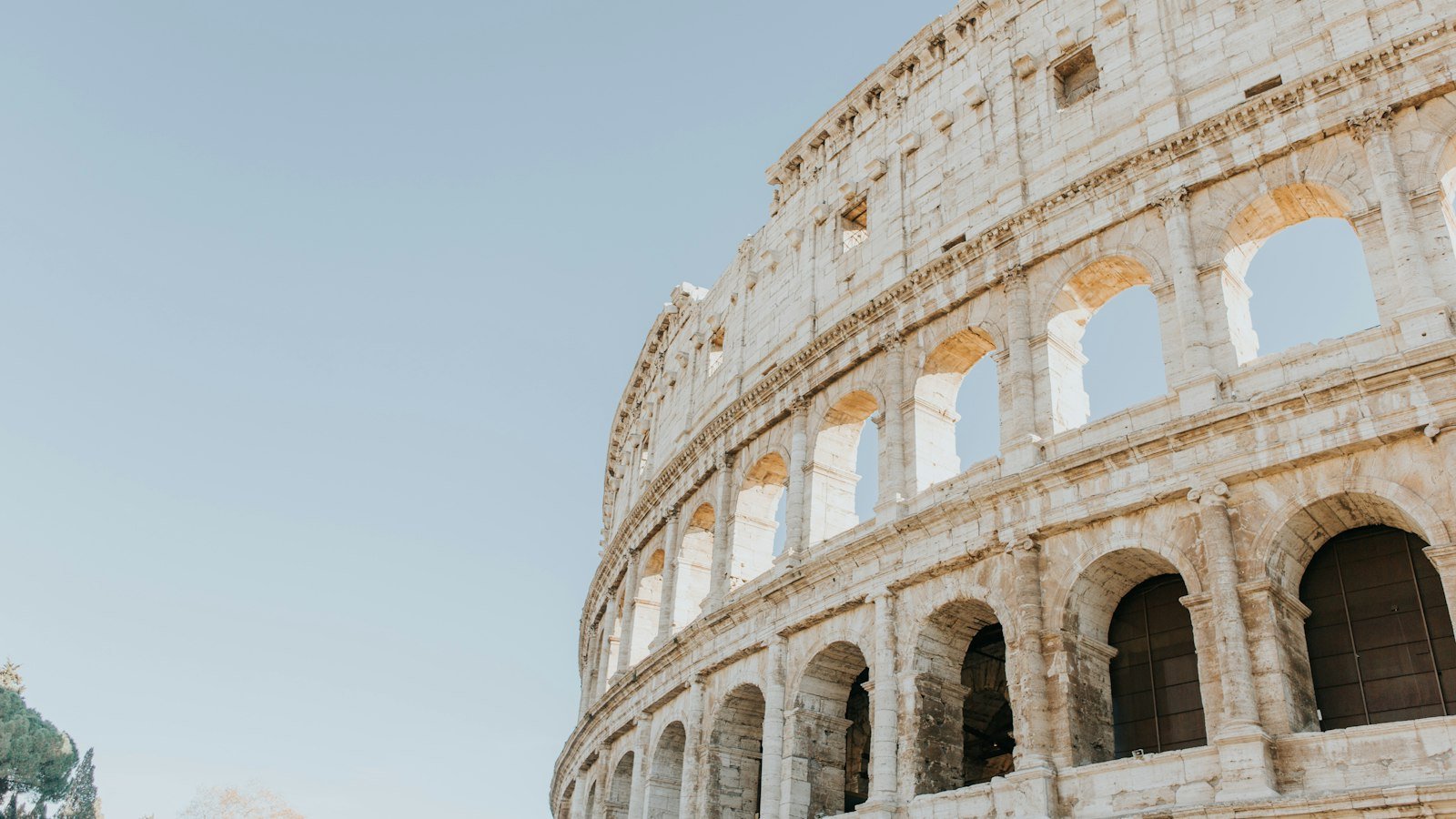
The Colosseum opens at 8:30 am all year and the first hour is the only time the arena is not full of other people’s photographs. Tickets are timed, named and sold through the official Parco archeologico del Colosseo site 30 days ahead, each slot appearing at roughly the same time of day it falls on, Rome time. Bring the ID that matches the name on the ticket. The ordinary 24-hour ticket is €18 (about $21 / £16) as of October 2026 and covers the first two tiers plus the Forum and Palatine. The Full Experience Arena ticket is €24 (about $28 / £21), valid two consecutive days, and puts you on the arena floor through the gladiators’ gate; the version adding the underground costs the same and sells out first. Under-18s are free but need a booked ticket with a €2 fee.
Our pick is the Full Experience Arena, bought the minute it is released. Arrive 20 minutes early for security and allow 90 minutes inside. Hours: 8:30 am to 7:15 pm from late March to September, 5:30 pm in October, 4:30 pm from the last week of October to the end of February, last entry an hour before closing.
10:15 am: the Forum and the Palatine Hill
Your Colosseum ticket includes one entry to the Forum and Palatine, which share a fence; the Palatine gate on Via di San Gregorio is two minutes away. Go up the Palatine first: the Farnese Gardens terrace looks down on the whole Forum and the imperial palaces are far emptier than the ruins below. Then walk the Forum from the Arch of Titus to the Arch of Septimius Severus, which brings you out beneath the Capitoline. Two hours is enough. There is no shade, so refill at the drinking fountains inside the site.
12:30 pm: lunch in Monti
Walk ten minutes up Via dei Fori Imperiali into Monti, the neighbourhood of wine bars and small trattorias behind the Forum. Skip anywhere with a photograph of the Colosseum on the menu board. Trattoria Luzzi on Via di San Giovanni in Laterano is loud, cheap and worth the wait; Al Vino Al Vino on Via dei Serpenti does Sicilian plates and a good glass. Gelato afterwards at Fatamorgana on Piazza degli Zingari.
2:30 pm: the Capitoline and the Vittoriano terrace
Michelangelo’s square on the Capitoline sits up the ramp from Piazza Venezia, and behind the Senate building there is a free balcony over the Forum that beats any view from inside it. Then cross to the Vittoriano, the white marble monument everyone photographs, and climb the free outside stairs to the upper terrace to look back over the whole of Day 1. After that, go back to the hotel; you have been on your feet since eight.
9:30 pm: the Trevi Fountain (now with a €2 ticket)
This changed in 2026. Since 2 February, non-residents pay €2 (about $2.30 / £1.75) to go down to the basin, entering on Via della Stamperia and leaving by Via dei Crociferi. Tickets are open-dated, sold on the official Fontana di Trevi site, at tourist information points, or by card at the gate; under-sixes are free. The lower level opens at 9 am most days, 11:30 am on Mondays and Fridays for cleaning, and closes at 10 pm with last entry at 9 pm, so be there by 8:45. The fountain is fully visible from the street above without a ticket, which is where most of the crowd now stands. Late evening is quieter than any daytime hour and the lighting is better.
Day 2: the Vatican, the dome and dinner in Trastevere
The Vatican Museums are the one queue in Rome that can swallow a morning. Two things beat it: the earliest timed slot on the official site, and being at the door 20 minutes before it. If you are sleeping on this side of the river, Hotel Isa in Prati has a rooftop terrace and is a few minutes from both Ottaviano metro and the museum entrance.
8:00 am: the Vatican Museums and the Sistine Chapel
The museums open Monday to Saturday at 8 am, last entry 6 pm, closing 8 pm, as of October 2026. The full ticket is €20 plus a €5 “skip the line” booking charge on the official Vatican Museums site, so €25 (about $29 / £22) all in; the reduced ticket for ages 6 to 18 and students under 25 is €10 plus the same €5, and under-sevens are free. Pay the €5. Without it you join the walk-up line, which at 1 pm in May runs an hour or more along the wall. Slots are released 60 days ahead and the 8 am ones in spring and autumn can be gone within hours. The ticket is valid only on the printed date and is not refundable.
Inside, go straight through: the Pinecone Courtyard, the Laocoön in the Pio-Clementino, the Gallery of Maps, the Raphael Rooms, then the Sistine Chapel. That is the direct route and takes two hours. The chapel is quietest in the first hour and no photographs are allowed. Plan on being out by 10:30 am.
10:45 am: St Peter’s Basilica and the dome
From the museum exit it is a 15-minute walk round the walls to St Peter’s Square. The basilica is free, with a security line that is worst between 10 am and 2 pm; on a weekday in October expect 20 to 40 minutes. Shoulders and knees covered. Hours from 26 October 2026 to late March are 7 am to 7 pm, and until 8 pm in summer, per the basilica’s own hours page. Wednesday mornings are usually closed for the papal audience, so if your Day 2 is a Wednesday, swap it with Day 3.
The dome is the best thing you will do today. The ticket office is to the right of the portico. At the last prices we could confirm, the lift to roof level and 320 steps from there is €10 (about $12 / £9); all 551 steps on foot is €8. The upper section is a narrow spiral where the wall leans in with the curve of the dome, not for anyone who dislikes tight spaces. Dome hours are 7:30 am to 5 pm in winter, 7 am to 6 pm in summer, and the basilica now sells dome tickets online bundled with an audio guide if you want it locked in. Allow 90 minutes; the route down brings you back inside the basilica, so see the interior then.
1:15 pm: lunch in Prati, then the river
Walk 15 minutes north to Via della Meloria for Bonci Pizzarium, the pizza-by-the-slice counter every Rome food writer lists, with reason; eat on the low wall outside. Or sit down at Il Sorpasso on Via Properzio in the Borgo. Afterwards, walk down Via della Conciliazione to Castel Sant’Angelo; the ramparts look back at the dome you just climbed, and the ticket was €14 when the guides we checked last visited. If you are flagging, the free walk across Ponte Sant’Angelo between Bernini’s angels is enough. Follow the river south, or take tram 8 from Largo Argentina, to Trastevere.
6:30 pm: Trastevere for the evening
Trastevere is where Rome eats. Santa Maria in Trastevere, the church on the main square, is free and has the best mosaics in the city; go in before dinner, when the gold catches the lamps. Book Da Enzo al 29 on Via dei Vascellari weeks ahead, or queue at Tonnarello, which moves faster than it looks. The lanes around Piazza Trilussa are loud until the small hours; Hotel Santa Maria, 19 ground-floor rooms around a courtyard of orange trees two minutes from the square, is the place to sleep here without the noise.
Day 3: the Centro Storico on foot
One cheap ticket today and almost no transport. This is the flat bend of the river where Rome’s piazzas sit a few minutes apart; walk it before the tour groups and leave the afternoon loose.
9:00 am: the Pantheon at opening
The Pantheon opens at 9 am daily, last entry 6:30 pm, and has charged for entry since 2023. The adult ticket was €5 for most of that time; guides updated this autumn report a rise to €7 (about $8 / £6) from July 2026, so budget €7 and check the figure when you book on the official Musei Italiani portal. Under-18s are free and EU citizens aged 18 to 25 pay €2. Buy online the night before and walk past the ticket line. The oculus, nine metres across and open to the sky, is why you came; at 9 am the beam of light is low and the floor is empty. Coffee afterwards at Sant’Eustachio, two minutes away, or Tazza d’Oro on the corner of the square for the coffee granita.
10:00 am: San Luigi dei Francesi and Piazza Navona
Three minutes west is San Luigi dei Francesi, the French church with three Caravaggios in the last chapel on the left, free, lit by a coin in the box. Two minutes more and you are in Piazza Navona, the long oval laid over Domitian’s stadium, with Bernini’s Four Rivers fountain in the middle. It fills by 11, so this is the hour. Skip the cafés on the square; the mark-up is heavy and the coffee is worse than Sant’Eustachio’s.
11:00 am: Campo de’ Fiori and the Jewish Quarter
Campo de’ Fiori’s market is now more souvenir stalls than vegetables, but cross it for the bakery Forno Campo de’ Fiori on the corner, where a strip of pizza bianca costs a couple of euros. Continue south through Via dei Giubbonari into the Jewish Quarter, past the Portico of Octavia and the Theatre of Marcellus, which looks like a smaller Colosseum with flats on top. Lunch here: carciofi alla giudia, the fried artichoke, is the dish, in season from late autumn to spring, and Nonna Betta or Giggetto on Via del Portico d’Ottavia are the long-standing names. Then walk two minutes to Largo di Torre Argentina to look down at the sunken temples where Caesar was killed, now a cat sanctuary.
2:30 pm: Via del Corso to the Spanish Steps
Walk north up Via del Corso, 20 minutes of chain shops, or along Via del Babuino, which is antiques and galleries. The Spanish Steps are at their most crowded now, and sitting on them has been banned since 2019 with fines handed out, so look, climb and keep moving. From Trinità dei Monti at the top, it is ten minutes along the ridge to the Pincio.
4:30 pm: the Pincio and Villa Borghese
The Pincio terrace looks down on Piazza del Popolo and across the roofs to St Peter’s, and is free, which puts it above most of the paid views in this plan. Behind it is Villa Borghese, the central park, with rowing boats on the little lake and benches for doing nothing. Stay for sunset if the sky is clear. Dinner three blocks off Via del Corso; the restaurants on the Corso itself and around the steps are for people who will never come back.
Day 4: the Borghese Gallery, the Aventine and Testaccio
Day 4 is what separates a good Rome trip from a tiring one: a museum where the ticket system does the crowd control for you, the quietest hill in the city, lunch where Roman cooking was invented, and sunset from the Gianicolo.
9:00 am: the Borghese Gallery
The Galleria Borghese admits a fixed number of people for two-hour slots, Tuesday to Sunday from 9 am with the last entry at 5 pm, and closes on Mondays. Reservation is compulsory. The full ticket is €16 plus a €2 booking fee, €18 (about $21 / £16) as of October 2026; under-18s are free but pay the fee. Book on the official Galleria Borghese site weeks ahead: when we checked on 23 October, the next two days showed no availability and most dates into November were marked as limited. Take the 9 am slot. The villa is cool, the rooms are empty, and the Bernini marbles on the ground floor, Apollo and Daphne and the Rape of Proserpina, will stay with you longer than anything in the Vatican. Six Caravaggios hang in one room upstairs. You are asked to leave when the two hours end.
11:30 am: across the city to the Aventine
Walk 15 minutes through the park to Spagna, take Metro A to Termini and Metro B two stops to Circo Massimo, about 35 minutes on one €1.50 ticket, or a taxi for around €15. From Circo Massimo it is a ten-minute climb to the Orange Garden (Giardino degli Aranci), a walled garden with a terrace over the river and the dome, free and rarely busy before mid-afternoon. Two minutes further along Via di Santa Sabina is the green door of the Knights of Malta, with the keyhole that frames St Peter’s dome at the end of an avenue of hedges; the queue is 20 or 30 people at any daylight hour and moves at a minute a person.
1:00 pm: lunch in Testaccio
Walk down the far side of the hill, 15 minutes, into Testaccio, the old slaughterhouse district where the offal dishes of Roman cooking come from. The covered Mercato di Testaccio has food stalls that beat any central market for value; Mordi e Vai does a sandwich of slow-cooked beef, cheap and fast. For a sit-down lunch, Felice a Testaccio on Via Mastro Giorgio makes the city’s most-mentioned cacio e pepe, mixed at the table; book it.
4:30 pm: the Gianicolo at sunset
Tram 8 or a 20-minute river walk brings you to Trastevere’s southern end, quieter than the part you saw on Day 2. From Piazza Trilussa the climb to the Gianicolo takes 20 minutes by the steps beside the Fontana dell’Acqua Paola. The terrace by the Garibaldi statue has the widest view in Rome, every dome in a row, and faces east, so the city is lit by the setting sun behind you. Walk down for a last dinner in Trastevere, or back into the Centro Storico over Ponte Sisto.
Getting around Rome in 2026: fares, passes and the airport
Rome’s metro has three lines and the two useful ones, A and B, cross at Termini and skirt the historic centre; nothing stops within ten minutes’ walk of the Pantheon or Piazza Navona. Buses fill the gap. The fares below are from ATAC, the city operator, as of October 2026. You can tap a contactless bank card at metro gates and on buses; it charges a single fare per journey and switches to the 24-hour rate once you pass four rides in a day.
| Fare (2026) | Price | Roughly in USD / GBP |
|---|---|---|
| BIT single ticket (100 minutes, one metro ride) | €1.50 | $1.75 / £1.30 |
| Roma 24-hour ticket | €8.50 | $10 / £7.40 |
| Roma 48-hour ticket | €15 | $17.50 / £13 |
| Roma 72-hour ticket | €22 | $25.50 / £19 |
| Weekly CIS (7 days) | €29 | $34 / £25 |
| Leonardo Express, Fiumicino to Termini | €14 | $16 / £12 |
| Fixed taxi, Fiumicino to inside the walls | €55 | $64 / £48 |
| Trevi Fountain lower level | €2 | $2.30 / £1.75 |
From Fiumicino. The Leonardo Express runs non-stop to Termini in 32 minutes, every 15 minutes, for €14; first train from the airport 5:38 am, last 11:27 pm, per Aeroporti di Roma. One child aged 4 to 11 travels free with each paying adult. For Trastevere or Ostiense the FL1 regional train stops at both, but not at Termini. A licensed white taxi charges a fixed €55 to any address inside the Aurelian Walls, for up to four passengers with luggage, in 40 to 60 minutes; the best deal for three or four people. Refuse anyone in the arrivals hall offering a car.
Is the Roma Pass worth it? The 72-hour version is €52 and includes transport plus two free entries from a list that covers the Colosseum and the Borghese. Against this itinerary, transport is about €8 and the two dearest entries are €24 and €18, so the pass saves nothing. The Vatican Museums and the Pantheon are not on it. Skip it.
Tourist tax and what hotels cost
Tourist tax. Rome’s contributo di soggiorno is charged per person per night by hotel category: €4 for one star, €5 for two, €6 for three, €7.50 for four and €10 for five (about $12 / £9), with B&Bs and holiday flats at €6 and hostels at €3.50. It applies for the first ten consecutive nights, and children under ten are exempt. The rates were set by Roma Capitale in 2023 and were unchanged when we checked in October 2026. Four nights in a four-star adds €30 per adult, usually collected at check-out.
Hotels. Rome is the most expensive city in Italy for rooms. In spring and autumn a well-reviewed three-star double in the centre runs €110 to €200 a night (about $128 to $232 / £95 to £172) and a four-star €180 to €320; the small hotels around the Pantheon and in Trastevere sell out first. For April to June and September to October, book three to four months ahead; for winter, a month is enough. Our guide to how far in advance to book a hotel has the data. To wake up looking at the Colosseum on Day 1, Mercure Roma Centro Colosseo on Via Labicana has a rooftop pool and bar facing it, though only the Superior rooms share the view.
What we’d change
Three days only: drop Day 4 and move the Borghese to a 5 pm slot on Day 3, after the Pincio, which is five minutes from the gallery. You lose the Aventine and Testaccio, which hurts less than losing anything else.
Five days: add a day trip. Ostia Antica, 30 minutes on the suburban train from Piramide, is a complete Roman port town with a fraction of the Forum’s visitors. Tivoli, an hour away, pairs Hadrian’s Villa with the fountains of Villa d’Este. Pompeii is not a day trip from Rome, whatever the tour companies say; it needs a night in Naples.
July or August: put every outdoor sight in the morning. Forum at 8:30 am and the Colosseum in a late-afternoon slot; the Aventine at 8 am before the Borghese rather than after it. Nothing on Day 3 has shade between noon and four, so that is the hour for a long lunch.
With children: the dome’s tight spiral and the Borghese’s two-hour slot are the things to reconsider; the Explora children’s museum beside Piazza del Popolo is the alternative to the gallery. The Colosseum’s arena floor is the most child-pleasing thing in the city.
FAQ
Is four days enough for Rome?
Yes. Three covers the Colosseum, the Vatican and the historic centre at a reasonable pace; the fourth adds the Borghese and the quiet hills, which is where most people say the trip came together. A fifth is for a day trip, not more Rome.
Which tickets do I really need to book in advance?
Three. The Vatican Museums, because walk-up queues run an hour or more and a timed slot is the only way to be first into the Sistine Chapel. The Colosseum, because tickets are named, timed and limited, and the arena and underground versions sell out on release day. The Borghese Gallery, because there is no walk-up entry at all. Everything else, including the Pantheon and the Trevi Fountain, can be bought the night before on your phone.
Is the Colosseum underground worth it?
It costs the same €24 as the arena ticket and adds the tunnels where animals and scenery were lifted into the show. If you can get it, take it. If it is sold out, the arena ticket is still the better buy over the plain €18 one; the floor-level view across the amphitheatre is the one in your head.
Do I have to pay to see the Trevi Fountain?
Only to go down to the water. Since February 2026 the lower level has been ticketed at €2 for non-residents; the fountain is fully visible from the street above for nothing. Late evening is the quietest time at either level.
Where should I stay for this itinerary?
The Centro Storico, between the Pantheon and Piazza Navona, puts three of the four days on foot; Monti is the value option with the Colosseum ten minutes away; Prati is the quiet, family choice near the Vatican. Our Where to Stay in Rome guide compares seven areas with hotel picks at three prices.
How we researched this: opening hours, ticket prices and fares were checked in October 2026 against the official sites of the Vatican Museums, St Peter’s Basilica, the Fontana di Trevi, ATAC, Trenitalia and Aeroporti di Roma, the 2026 Colosseum hours and ticket rules as published by established Rome tour operators, Rome’s municipal tourist-tax schedule as reported by an independent tax tracker, current hotel rates on major booking sites, and recent itineraries from independent Rome-based writers. Where sources disagreed, notably on the Pantheon ticket price, we say so in the text. Prices and hours change; confirm before you travel.
Leave a Reply