Last updated: 10 November 2026. This guide contains affiliate links; if you book through one we may earn a commission at no extra cost to you. How we make money.
Short answer: on a first trip to Barcelona, stay in the Eixample, ideally the stretch between Plaça de Catalunya and Passeig de Gràcia or the quieter left side around Universitat. It is flat, safe, on several metro lines, and a 15–20 minute walk from the old town, with Gaudí’s best buildings on your doorstep. If you want medieval lanes outside the front door, pick El Born over the Gothic Quarter. If you are staying a week or more and prefer neighbourhood squares to sights, Gràcia is the one we would choose.
Quick answer: where to stay in Barcelona
| If you are… | Stay in | Our top pick |
|---|---|---|
| A first-time visitor | Eixample | Hotel Constanza |
| A couple who plans the day around dinner | El Born | Miiro Borneta |
| Here for one big splurge in the old town | Gothic Quarter | Mercer Hotel Barcelona |
| Staying a week or longer on a budget | Gràcia | Casa Gracia |
| Travelling with children and want the beach | Poblenou | Paxton Barcelona |
| Watching the budget but want to be central | Poble Sec | INNSiDE by Meliá Barcelona Apolo |
In this guide
- Barcelona neighbourhoods compared
- Eixample: best for first-timers
- Gothic Quarter: best for history on the doorstep
- El Born: best for couples and food
- Gràcia: best for longer stays
- Poble Sec & Sant Antoni: best for value
- Poblenou: best for families and the beach
- Areas to think twice about
- What Barcelona hotels cost in 2026
- Tourist tax, airport and getting around
- FAQ
Barcelona neighbourhoods compared
The old town (Ciutat Vella) sits by the sea, the Eixample grid spreads inland from it, and Gràcia, Poble Sec and Poblenou fan out around the edges. Most sights are within a 30-minute walk of Plaça de Catalunya, and the only real climbs are towards Montjuïc and above Gràcia. The deciding factor is noise at night.
| Area | Best for | Hills / walkability | Night noise | Transport | Mid-range price |
|---|---|---|---|---|---|
| Eixample | First trip, Gaudí, shopping | Flat, wide pavements | Low–medium (street-facing rooms) | Excellent: several metro lines | €150–€240 |
| Gothic Quarter | History, short stays | Flat, narrow lanes, few cars | High near Las Ramblas | L3, L4 | €160–€250 |
| El Born | Couples, food, bars | Flat, pedestrianised | High Thu–Sun | L4 at the edges | €140–€220 |
| Gràcia | Longer stays, local life | Gentle slope, steeper to the north | Low, except main squares | L3 (Fontana, Diagonal) | €140–€220 |
| Poble Sec & Sant Antoni | Value, tapas, Montjuïc | Flat by Paral·lel, steep uphill | Medium near Carrer de Blai | L2, L3 | €130–€200 |
| Poblenou | Families, beach, space | Flat | Low | L4, tram | Usually below Eixample |
| Barceloneta | Beach in summer | Flat | High in summer | L4 | €170–€260 |
Eixample: best for first-timers
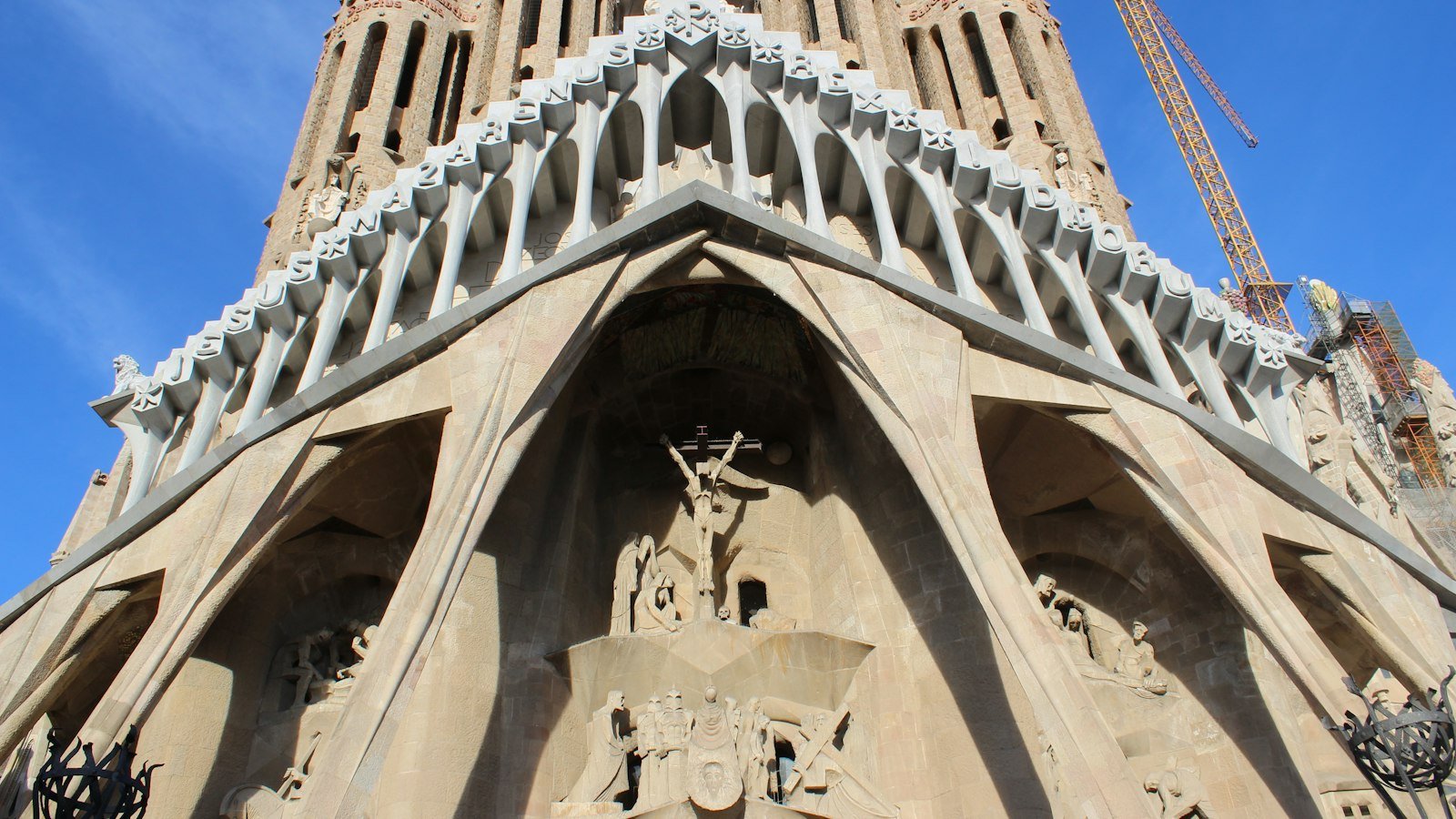
The Eixample is the 19th-century extension laid out on a grid of octagonal blocks, and it is where Barcelona actually lives and works. Passeig de Gràcia runs through the middle, lined with Casa Batlló, Casa Milà and the big shops; the Sagrada Família sits in the eastern half. El Born is about 20 minutes away on foot and the beach about 30, and several metro lines cross it. It is the area we would send a nervous first-timer to without hesitation.
The block matters: hotels around Passeig de Gràcia are the priciest, while the left side towards Universitat and Sant Antoni is calmer and better value.
The trade-off: less atmosphere than the old town, the city’s highest prices near Passeig de Gràcia, and heavy traffic on the grid. Ask for an interior room; terrace streets such as Carrer d’Enric Granados stay lively late.
Our picks:
- Budget: Somnio Hotel – a clean, modern small hotel in the left Eixample, a sensible base if you mostly need a good bed and a short walk to the metro.
- Mid-range: Hotel Constanza – a boutique hotel in the left Eixample with a rooftop terrace, about five minutes from Passeig de Gràcia. Our default recommendation for a first trip.
- Splurge: Hotel Casa Sagnier – a boutique hotel at Rambla de Catalunya 104, on a pedestrianised boulevard, with a rooftop terrace. Booking.com was listing it from about €350 a night (roughly $388) when we checked.
See all hotels in the Eixample →
Gothic Quarter: best for history on the doorstep
The Barri Gòtic is the oldest part of Barcelona: Roman walls, the Cathedral, Plaça de Sant Jaume and a knot of lanes that are mostly closed to traffic. The Picasso Museum, the Boqueria and the waterfront are all within about ten minutes on foot.
The trade-off: it is the most crowded part of the city, restaurants near Las Ramblas are aimed at tourists, and pickpockets work the same streets you do. Taxis often cannot reach hotel doors. The Cathedral end is noticeably calmer than the Ramblas end, so aim for that.
- Mid-range: Barceló Gothic – modern rooms in a historic building, with soundproofed windows, which matters here more than anywhere else in the city.
- Splurge: Hotel Neri – a five-star Relais & Châteaux hotel in an old palace on a small square by Plaça de Sant Felip Neri, steps from the Cathedral, with a rooftop terrace. The square is pedestrianised, so a taxi leaves you a short walk away.
- Big splurge: Mercer Hotel Barcelona – five stars, built into restored medieval buildings that incorporate sections of the Roman wall, with an orange-tree courtyard and a rooftop pool.
See all hotels in the Gothic Quarter →
El Born: best for couples and food
El Born is the other half of the old town, across Via Laietana from the Gothic Quarter. It has the same narrow medieval lanes but feels more local: Santa Maria del Mar, the Picasso Museum, small wine and cocktail bars, and some of the best restaurants in the centre. For a long weekend for two, this is where we would look first.
The trade-off: it is loud from Thursday to Sunday, many streets are closed to taxis, and the nearest metro is Jaume I on line 4. For sleep, pick an interior room or a hotel on the Ciutadella side.
- Budget: Motel One Barcelona-Ciutadella – a stylish, affordable chain hotel by Parc de la Ciutadella, on the quieter edge of El Born.
- Mid-range: Hotel REC Barcelona – a contemporary, adults-only hotel near the Arc de Triomf with a rooftop terrace and a small pool. It sits just outside the core of El Born, which makes it quieter.
- Splurge: Miiro Borneta – a boutique hotel at Passeig de Picasso 26, facing Ciutadella park, with a rooftop pool.
Gràcia: best for longer stays
Gràcia feels like a small town inside the city: a grid of small streets and squares (Plaça del Sol, Plaça de la Virreina, Plaça de la Vila) with independent shops, cheap lunches and very few tour groups. Park Güell is about a 15-minute walk uphill, and line 3 from Fontana or Diagonal reaches the Gothic Quarter in around ten minutes.
The trade-off: fewer metro options than the Eixample, a thinner choice of hotels, and a slope that gets steeper the further north you go. Plaça del Sol is noisy in the evenings and at weekends, and in August the neighbourhood festival makes some streets very loud late into the night. If you visit then, avoid rooms on the festival streets.
- Budget: Casa Gracia – a hostel-hotel hybrid in a renovated Modernista building where Passeig de Gràcia meets Gràcia, with private rooms as well as dorms and a rooftop terrace.
- Splurge: Hotel Casa Fuster – a five-star hotel in a Modernista landmark at Passeig de Gràcia 132, on the Gràcia–Eixample border. It is on a main avenue, so you are well connected but not tucked away.
Poble Sec & Sant Antoni: best for value
Poble Sec sits at the foot of Montjuïc, between Avinguda del Paral·lel and the hill. Carrer de Blai is the city’s best-known pintxos strip, and the Miró Foundation and MNAC are a walk or funicular ride away. Next door, Sant Antoni has the restored market and vermouth bars. Both are good value within walking distance of the old town.
The trade-off: Paral·lel is a busy road, so rooms facing it are noisy, and the streets climbing towards Montjuïc are steep. Avoid rooms directly above the Carrer de Blai terraces.
- Budget: Pars Teatro Hostel – a hostel on Avinguda del Paral·lel with private rooms as well as dorms.
- Mid-range: INNSiDE by Meliá Barcelona Apolo – a four-star on Paral·lel, steps from the metro. Ask for a room away from the avenue.
- Boutique: Hotel Brummell – 20 rooms, a courtyard and a small outdoor pool near the foot of Montjuïc. The walk back from Paral·lel metro is slightly uphill.
Poblenou: best for families and the beach
Poblenou is the old industrial district north-east of the centre, now full of converted warehouses, design studios, cafés and the Rambla del Poblenou. Its beaches (Bogatell, Mar Bella, Nova Icària) are cleaner and calmer than Barceloneta, the streets are wide and flat, and the area has some of the newest hotels in the city, several with rooftop pools. It is our pick for families in summer.
The trade-off: the Gothic Quarter is about 25 minutes on foot or roughly 10 minutes on metro line 4, so you will use public transport for most sights. The Glòries and 22@ side is office-heavy and less beachy, so check which end your hotel is on.
- Mid-range: Acta Voraport – a modern hotel near the Rambla del Poblenou with a rooftop infinity pool, about 10–13 minutes on foot from Bogatell beach. Booking.com listed it from roughly €110 (about $123) when we checked.
- Family pick: Paxton Barcelona – a four-star with a rooftop pool near Llacuna metro, about ten minutes’ walk from Bogatell beach.
Areas to think twice about
Las Ramblas itself. It is the most famous street in the city and the worst place to sleep in it: crowded around the clock, overpriced, and the busiest pickpocketing zone in Barcelona.
Southern El Raval. The Raval has the MACBA, good cheap restaurants and is changing fast, but petty crime persists towards the southern end near Drassanes and some streets feel uncomfortable late at night. Visit, but stay elsewhere on a first trip.
Barceloneta in summer. Sleeping a few steps from the sand sounds ideal, but in July and August the beach is packed, the promenade is loud, and seafood on the front is overpriced. If the beach is the point, Poblenou does it better. If you want a beach landmark, the sail-shaped W Barcelona on the breakwater is the obvious splurge, but it is a resort stay rather than a city base.
Around Sants station. Practical for early trains, but a transport hub rather than a place to enjoy.
What Barcelona hotels cost in 2026
Published 2026 estimates put the average hotel night at around €110–€130, with these typical ranges:
| Type | Per night (EUR) | Roughly in USD / GBP |
|---|---|---|
| Hostel dorm bed | €22–€40 | $25–$45 / £18–£33 |
| Budget hotel or guesthouse | €55–€95 | $61–$106 / £46–£79 |
| Mid-range (3-star) double | €95–€190 | $106–$212 / £79–£158 |
| 4–5-star | €190–€550+ | $212–$614+ / £158–£459+ |
When to book: June to August is peak season and spring and autumn stay busy; November to March, outside Christmas, is cheapest. For a summer or spring trip, book two to three months ahead; small boutique hotels with rooftop pools are the first to go. For winter, four to six weeks is usually enough. Our guide to how far in advance to book a hotel has the detail, and if you are weighing a rental, read hotel vs Airbnb first: the tax on licensed tourist apartments is higher than on four-star hotels.
Tourist tax, airport and getting around
Tourist tax. Catalonia doubled its overnight-stay tax on 1 April 2026, and Barcelona adds a city surcharge on top, now €5 per person per night (up from €4). According to the Ajuntament de Barcelona, that makes the total about €12 per person per night in a five-star hotel, €8.40 in a four-star, €9.50 in a licensed tourist apartment and €7 in other hotels. The city surcharge is due to rise by €1 a year until it reaches €8 in 2029. Tax guides say it is charged on the first seven nights of a stay; check with your hotel, as it is usually collected at check-in rather than included in the room price.
Getting in from the airport. El Prat has two terminals, 14–17 km from the centre. Your options:
- Aerobús – the simplest option for most first-timers. The A1 (Terminal 1) and A2 (Terminal 2) run 24 hours a day to Plaça d’Espanya, Gran Via, Universitat and Plaça de Catalunya in about 30–35 minutes. Fares in force since March 2026 are €7.75 one way or €13.30 return. Metro travel cards are not valid.
- Metro L9 Sud – the dedicated Airport ticket from TMB costs €5.90 and covers the airport stations at both terminals plus the rest of the metro network. Allow about 30 minutes plus one change. The T-casual is not valid at the airport stations.
- Rodalies R2 Nord train – serves Terminal 2 only (a free shuttle bus links T1), runs every 30 minutes and reaches Sants in roughly 17–20 minutes.
- Taxi – metered, with a €21 minimum from the airport; expect roughly €26–€36 to Plaça de Catalunya outside rush hour, more at night.
Getting around. A single metro or bus ticket costs €2.90 and the 10-journey T-casual costs €13 for zone 1, according to TMB’s 2026 fare table, which brings each ride down to €1.30.
Safety. Violent crime against visitors is uncommon; petty theft is the real risk. The hotspots are Las Ramblas, crowded metro carriages, the beach and busy terraces. Keep phones off café tables and bags zipped and in front of you.
FAQ
Is the Eixample or the Gothic Quarter better for a first visit?
The Eixample for most people. It is quieter, safer at night, better connected and has more good mid-range hotels. The Gothic Quarter makes sense for a short stay if atmosphere matters more than sleep.
How many nights do I need in Barcelona?
Three full days covers the Sagrada Família, the old town, a Gaudí house and Montjuïc at a comfortable pace. Add a fourth for a day trip.
What is the safest area to stay in Barcelona?
The Eixample, Gràcia, Sant Antoni and residential Poblenou. The real risk anywhere in the centre is theft rather than violence, so choose a hotel a few streets away from Las Ramblas.
Is it worth staying near the beach?
Only from June to September, and even then Poblenou beats Barceloneta for calm and space.
How we researched this: neighbourhood details, hotel facts and prices were cross-checked in November 2026 against the Barcelona city council and Catalan legislation on the tourist tax, TMB’s published 2026 fares, airport transfer information citing the Aerobús and AMB taxi tariffs, current hotel listings on major booking sites, and recent neighbourhood guides by Barcelona-based writers. Prices move; always confirm before you book.
Leave a Reply