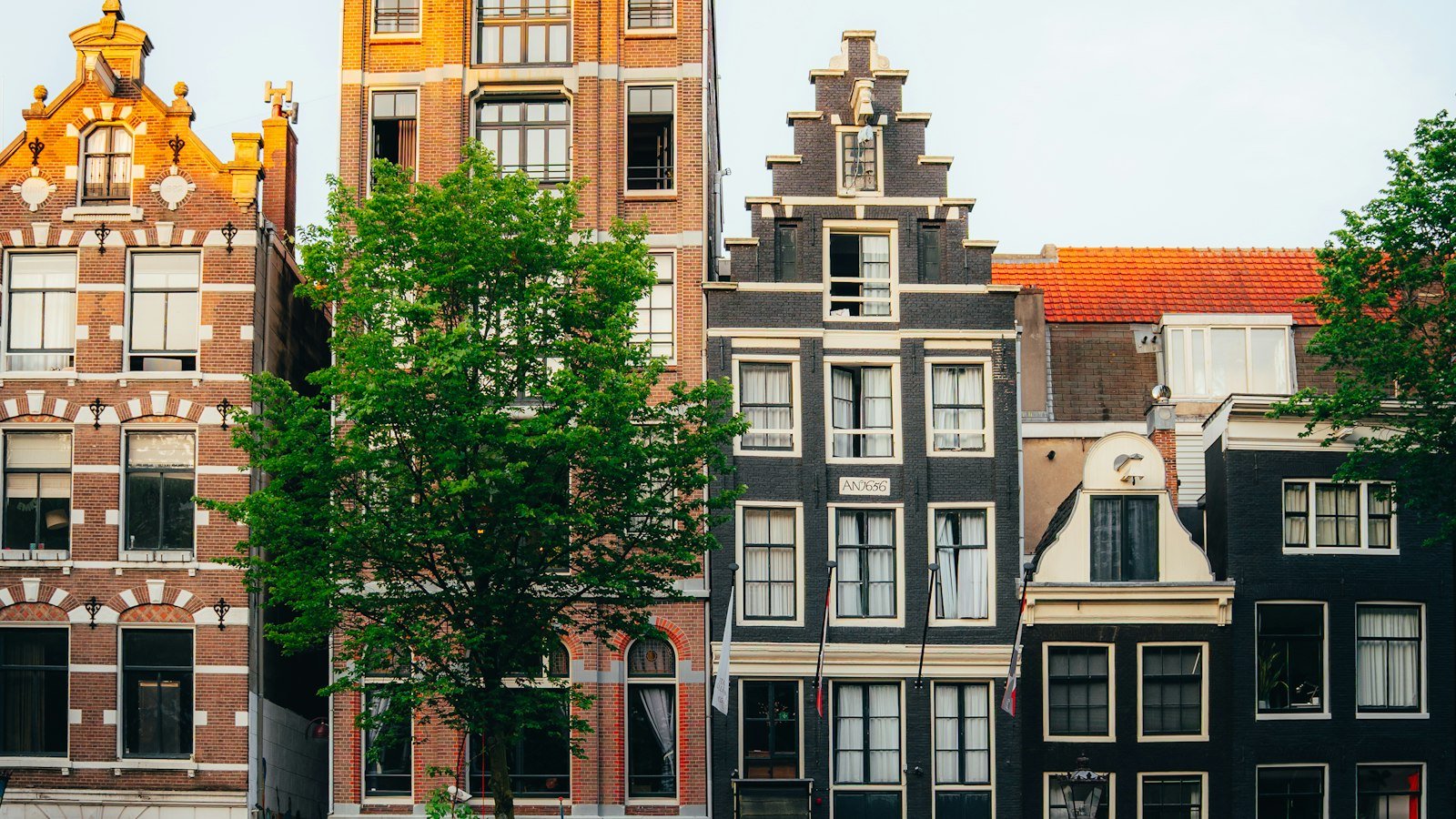
Last updated: 23 November 2026. This guide contains affiliate links; if you book through one we may earn a commission at no extra cost to you. How we make money.
Short answer: three days is the right length for a first trip to Amsterdam, as long as you give each day one centre of gravity. Day 1 is the old city and the canals on foot, a one-hour boat trip, and an evening slot at the Anne Frank House when the queues of day-trippers have gone. Day 2 is the two great museums on Museumplein, Vondelpark and dinner in De Pijp. Day 3 leaves the city: the windmills of the Zaanse Schans in the morning and Haarlem in the afternoon, both under 20 minutes by train from Centraal. The one thing you must sort out before you fly is the Anne Frank House: tickets are only sold online, and they go on sale six weeks ahead.
At a glance
| Day | Area | Theme |
|---|---|---|
| Day 1 | Old Centre, Canal Ring, Nine Streets, Jordaan | Canals on foot and by boat, then the Anne Frank House in the evening |
| Day 2 | Museumplein, Vondelpark, De Pijp | Rembrandt and Van Gogh, a park walk and a market-district dinner |
| Day 3 | Zaanse Schans and Haarlem | Working windmills in the morning, a compact Dutch city in the afternoon |
The practical bit
- Best months: April to June and September are the most pleasant for walking days, and also the most expensive for hotels. November to February is cheaper and quieter, but the light goes early and some of the Zaanse Schans windmills close for the winter.
- Pace: moderate. Amsterdam is flat and compact, so most of Days 1 and 2 is on foot. Day 3 is the longest, with four short train rides.
- Budget per person per day: about €30–€55 (roughly $33–$60 / £25–£46) in tickets and city transport on Days 1 and 2, before food and hotels. Day 3 costs only your train fares unless you pay to go inside the windmills and museums.
- Book ahead: the Anne Frank House (no tickets at the door), plus timed slots for the Rijksmuseum and the Van Gogh Museum. Both museums require a start time, and the Van Gogh Museum does not sell at the door.
- Days to watch: the Albert Cuyp Market on Day 2 does not trade on Sundays, so do not make Day 2 a Sunday. The Van Gogh Museum stays open until 9:00 pm on Fridays, which gives you a useful fallback if your afternoon slot sells out.
In this guide
- Day 1: the canals, the Jordaan and the Anne Frank House
- Day 2: the Rijksmuseum, Van Gogh and De Pijp
- Day 3: Zaanse Schans and Haarlem
- Ticket prices in one table
- Getting around, the airport and tourist tax
- What we’d change
- FAQ
Day 1: the canals, the Jordaan and the Anne Frank House
The first day is about getting your bearings in the horseshoe of canals around Centraal Station. Everything on it is walkable, and the only fixed time is your Anne Frank House slot. We put it in the evening on purpose: the house is open until 10:00 pm every day, and the late slots are calmer than the mid-morning ones.
Base yourself in the Canal Ring, ideally on its western side near the Nine Streets. From there the Anne Frank House, Dam Square and the Jordaan are a few minutes on foot, and the Rijksmuseum is a canal-side walk south. Our pick is Ambassade Hotel, a row of linked canal houses on the Herengracht where most rooms look over the water. For something smaller and usually cheaper for its looks, try Hotel Estheréa, and book early. Canal-house hotels often have steep, narrow stairs, so check for a lift if that matters. The full area-by-area comparison is in our Where to Stay in Amsterdam guide. See all hotels in the Canal Ring →
9:30 am: the Begijnhof
Start in the quietest place in the centre. The Begijnhof is a hidden courtyard of old houses around a lawn, reached through a doorway off the Spui. It is free and usually open from 9:30 am. People still live here, so keep your voice down, and give it 20 minutes.
10:00 am: the Flower Market and Dam Square
Walk five minutes south to the Bloemenmarkt, the floating flower market along the Singel. Then head north up the Kalverstraat to Dam Square, the city’s main square, with the Royal Palace on its west side and the National Monument facing it. This is the busiest spot in Amsterdam, so keep your phone and wallet somewhere zipped.
11:15 am: a one-hour canal cruise
Walk up the Damrak to Centraal Station, about ten minutes, where most of the big operators leave from the quays opposite the station. A standard one-hour cruise on a covered boat with an audio guide costs from about €15.50 (around $17 / £13) online with Lovers, and Stromma’s 100 Highlights cruise starts from €13.50, as of November 2026. Buying at the counter usually costs a few euros more. A covered boat is the sensible choice from October to April. If you want a small open boat with a live guide, expect to pay more, from around €20 to €24.
12:45 pm: lunch and the Nine Streets
Walk west across the canals to the Nine Streets, the small cross-streets between the Singel and the Prinsengracht. Independent shops, vintage clothes and cafés make them the most pleasant place in the centre for two unplanned hours. Walk the length of the Herengracht and the Keizersgracht between the side streets to see the grandest canal houses.
3:00 pm: the Jordaan
Cross the Prinsengracht into the Jordaan. This was once a working-class district, and it still feels like a neighbourhood rather than a sight: narrow canals, gabled houses, plant-filled doorsteps and old brown cafés. There is nothing to tick off: wander north along the Bloemgracht and Egelantiersgracht and stop in a brown café. If you would rather sleep somewhere quieter than the Canal Ring, Mr. Jordaan is a canal-house hotel within walking distance of the Anne Frank House.
5:30 pm: an early dinner in the Jordaan
Eat early, within ten minutes of the Westermarkt, and book on a Friday or Saturday.
7:30 pm: the Anne Frank House
The entrance is at Westermarkt 20, around the corner from the canal-side house at Prinsengracht 263. From Dam Square it is about a ten-minute walk; from Centraal, about 20 minutes, or take tram 13 or 17 to the Westermarkt stop.
Tickets are sold online only, for a fixed date and time, and they are not sold at the door. Every Tuesday at 10:00 am Central European Time, all tickets are released for visits six weeks later, and there is no waiting list. As of November 2026 an adult ticket costs €16.50 (about $18 / £14), which includes a €1 booking fee; ages 10 to 17 pay €7 and children under 10 pay €1. The official Anne Frank House site also sells tickets with a 30-minute introductory programme in English, for ages 10 and over, at €7 extra. You cannot add the programme to a ticket you have already bought, and tickets cannot be rescheduled or refunded.
The visit takes about an hour, through the warehouse and the Secret Annex behind the bookcase where Anne Frank’s family hid. Only bags smaller than an A4 sheet are allowed in the free cloakroom, so leave larger bags at the hotel. The house is open from 9:00 am to 10:00 pm daily, with earlier closing on a handful of dates such as King’s Day and Christmas Day.
Day 2: the Rijksmuseum, Van Gogh and De Pijp
Both great art museums stand on Museumplein, a few minutes apart. Doing them on the same day is tiring but efficient; the trick is a long lunch between them and a park walk after. If museums are not your thing, pick one and spend the spare time in Vondelpark.
For a hotel on the museums’ doorstep, Hotel Aalders is a simple three-star one block from the Van Gogh Museum, with four-person rooms that suit families. Bus 397 from Schiphol stops at Museumplein, which makes arrival easy. See all hotels in the Museum Quarter →
9:00 am: the Rijksmuseum
Take the first slot of the day. The Rijksmuseum, at Museumstraat 1, is open every day of the year from 9:00 am to 5:00 pm, including public holidays, and every visitor must book a start time. As of November 2026 an adult ticket is €25 (about $27 / £21), and everyone aged 18 and under gets in free, though they still need a timed ticket. The price rises to €26.50 from 2027. Book on the Rijksmuseum website; a small number of tickets are kept for sale at the entrance, but do not count on them.
Go straight to the Gallery of Honour on the second floor for Rembrandt’s The Night Watch and the Vermeers, before the tour groups arrive. Then choose one more section and stop there. Two to two and a half hours is plenty; have a long sit-down lunch around Museumplein before the next museum.
1:00 pm: the Van Gogh Museum
The Van Gogh Museum is at Museumplein 6, a few minutes’ walk across the square. All tickets are sold online for a fixed date and time, and they are non-refundable. Adult tickets cost from €25 (about $27 / £21) on the official Van Gogh Museum site, as of November 2026; visitors under 18 are free but still need a slot. Some resellers charge more for the same ticket, so book direct. The museum opens at 9:00 am daily. In late November and early December it closes at 5:00 pm, with Fridays open until 9:00 pm, and last entry is 30 minutes before closing. Opening hours change through the year, so check before you book.
The permanent collection follows Van Gogh’s short career in order, from the dark early paintings of Dutch peasants to the colour of his years in Paris and the south of France. It is the largest collection of his work in the world. Allow about two hours. The audio tour costs from €3.75 for adults and is worth it here, because the letters it quotes explain the paintings well.
3:15 pm: Vondelpark
Vondelpark begins a couple of minutes west of Museumplein. It is free and open, and a loop of its lakes and lawns takes 30 to 45 minutes. Watch the cycle paths: in Amsterdam bikes move fast and riders rarely slow down for pedestrians.
4:15 pm: the Albert Cuyp Market and De Pijp
Walk east for about 20 minutes, or take a tram, to De Pijp, the district just south of the canal belt. The Albert Cuyp Market runs along its main street from Monday to Saturday, from about 9:30 am to 5:00 pm, so you will catch the last of it. Look for fresh stroopwafels and raw herring stalls. Then stay for dinner: De Pijp’s side streets are packed with restaurants, bakeries and bars, and it is where many locals go out to eat.
If food matters more to you than canal views, base yourself here instead. Sir Albert Hotel is a boutique hotel around the corner from the market; light sleepers should ask for a room away from the street, because the trams start early.
Day 3: Zaanse Schans and Haarlem
Two short trips that show you the Netherlands outside Amsterdam: a riverside village of working windmills, and a handsome old city that feels like a calmer Amsterdam. Both run from Amsterdam Centraal, so this is the day to be staying near the station. Monet Garden Hotel is a four-star boutique on a quiet canal in the eastern centre, about ten minutes’ walk from Centraal.
9:00 am: train to Zaandijk Zaanse Schans
Local trains from Amsterdam Centraal reach Zaandijk Zaanse Schans station in about 17 minutes. From there it is a walk of roughly a kilometre, over the bridge across the river Zaan, to the village. The alternative is bus 800 from Centraal, which takes about 24 minutes and runs every 15 minutes between 9:00 am and 5:00 pm.
9:30 am: the Zaanse Schans
The Zaanse Schans is a collection of green wooden houses, workshops and industrial windmills along the Zaan, many moved here from elsewhere in the region. The village itself is free to walk around. In 2025 there were reports that visitors would be charged a €17.50 entrance fee from 2026, but as of November 2026 the official Zaanse Schans site still says the heritage village is freely accessible.
What you pay for is going inside. The Zaanse Schans Ticket covers two windmills of your choice, the Windmill Museum, the Zaans Museum with the Verkade Experience, Museum Zaanse Tijd and a digital audio tour. Buy it on the official site, where the current price is shown; we could not confirm it independently this month, so we have not quoted one. In winter fewer mills open. On the day we checked, in late November, three were open (De Huisman from 10:00 am to 5:00 pm, and De Kat and Het Jonge Schaap from 9:30 am to 4:30 pm), so look at the opening-hours page the night before.
Arrive early, before the coach tours; two and a half hours is enough for a mill, the riverbank and one museum.
12:30 pm: back to Centraal, then on to Haarlem
Take the train back to Amsterdam Centraal and change for Haarlem. Trains between the two run every few minutes during the day, and the journey takes about 15 minutes. Eat lunch when you arrive; the streets around the Grote Markt are full of cafés.
2:00 pm: the Grote Markt and the old town
Haarlem’s centre is a short walk south of the station. The Grote Markt is its main square, dominated by the Grote Kerk, the great church of St Bavo, with the old town hall opposite. From there, walk the shopping lanes the city calls the Golden Streets and down to the river Spaarne, where the Molen de Adriaan windmill stands on the bank.
3:30 pm: the Frans Hals Museum
If you want one museum in Haarlem, make it the Frans Hals Museum, which opened in 1862 and is named after the Golden Age portrait painter. It has two locations, a short walk apart. Check the museum’s own site for current prices, as we could not confirm them this month.
5:30 pm: dinner in Haarlem, then back to Amsterdam
Stay for dinner; Haarlem is calmer than central Amsterdam in the evening. A popular option is Jopenkerk, a brewery and restaurant in a converted church. You do not need to rush: trains back to Amsterdam run until about 1:00 am.
Ticket prices in one table
Prices are for a standard adult as of November 2026. Conversions use about $1.10 to the euro (mid-market rate, 23 November 2026) and about £0.84 to the euro (mid-market rate, 20 November 2026), rounded.
| Sight | Adult price | Roughly in USD / GBP | Hours | Book ahead? |
|---|---|---|---|---|
| Anne Frank House | €16.50 (incl. €1 fee) | $18 / £14 | 9 am–10 pm daily | Yes, online only; released Tuesdays, six weeks ahead |
| Rijksmuseum | €25 (free 18 and under) | $27 / £21 | 9 am–5 pm daily | Yes, timed start required |
| Van Gogh Museum | from €25 (free under 18) | from $27 / £21 | 9 am–5 pm; Fridays to 9 pm (late Nov) | Yes, online only |
| One-hour canal cruise | €13.50–€15.50 | $15–$17 / £11–£13 | All day | Online is cheaper |
| Begijnhof, Vondelpark, Zaanse Schans village | Free | Free | Daytime | No |
The three main sights plus a cruise come to about €82 per person (roughly $90 / £69). Under-18s pay only for the Anne Frank House and the boat.
Getting around, the airport and tourist tax
In the city. Trams, buses, the metro and ferries are run by GVB. The simplest option is to tap in and out with a contactless bank card (OVpay): €1.16 per boarding plus about €0.22 per kilometre, capped at €10.50 a day. Always tap out, or you can be charged a €4 penalty fare. On this plan you will walk most of the time, so pay as you go. If you prefer a pass, GVB tickets cost €3.40 for an hour, €10 for 24 hours, €16 for 48 hours and €21.50 for 72 hours (about $24 / £18).
From Schiphol Airport. Trains run from the station beneath the arrivals hall to Amsterdam Centraal in about 15 to 20 minutes, several times an hour by day and through the night. A single e-ticket starts at €5.50 (about $6 / £5). For the Museum Quarter or Leidseplein, bus 397 takes 30 to 45 minutes and costs €6.50. If you will use the airport train or bus at both ends, the Amsterdam Travel Ticket, at €20, €27 or €34 for one, two or three days, covers the airport journey plus all GVB transport. It does not cover the trains to Zaanse Schans or Haarlem, so buy those separately or tap in with your card.
Tourist tax. In 2026 Amsterdam charges 12.5% of the room price, calculated before VAT, every night with no cap, and hotel VAT itself rose from 9% to 21% this year. Hotels in the city report that the council approved a rise to 16% from 1 January 2027. Check whether the price you are shown includes both. For when to book around peak periods, see our guide to how far in advance to book a hotel.
A safety note. Amsterdam is a safe city; the real hazard for visitors is the bike lanes. They are often red, they are busy, and they are easy to mistake for pavement. Look both ways before stepping off any kerb, and do not stop to take photos in one. Keep valuables secure in crowds around Dam Square and Centraal Station. Event listings and the city’s own visitor advice are on I amsterdam, the official tourism site.
What we’d change
If you could not get Anne Frank House tickets: check the official site again on the morning of each Tuesday before your trip, but accept that it may not happen. There is no legitimate queue at the door. Use the evening for a second canal walk and the Westerkerk area instead, and skip resellers offering “guaranteed” entry.
If two museums in a day is too much: visit the Van Gogh Museum on a Friday evening, when it stays open until 9:00 pm, and do the Rijksmuseum alone on Day 2. That frees the afternoon for De Pijp and a slower lunch.
If Day 3 feels like too much travel: pick one. Choose the Zaanse Schans in spring or summer, when more mills are open and turning. Choose Haarlem in winter or on a wet day, when the Zaanse Schans is at its bleakest and Haarlem’s museums and cafés are at their best.
FAQ
Is three days enough for Amsterdam?
For a first visit, yes. Two days covers the canals, the Anne Frank House and the big museums, and the third gives you a day trip. Add a fourth day if you want to see Noord or slow down.
When do Anne Frank House tickets go on sale?
Every Tuesday at 10:00 am Central European Time, for visits six weeks later. They are sold only on the official website, there is no waiting list and they are not sold at the door. Popular slots go fast, so set a reminder.
Rijksmuseum or Van Gogh Museum, if I only have time for one?
The Rijksmuseum, for its range: Rembrandt, Vermeer and the whole Dutch Golden Age under one roof. Pick the Van Gogh Museum if he is the artist you came for. Both cost €25 for adults, and both are free for under-18s.
Is the Zaanse Schans worth it in winter?
It is still pretty, and much quieter, but several windmills close and the walk from the station is exposed. In November and December we would choose Haarlem if you only have time for one trip.
Where should I stay for this itinerary?
The western Canal Ring, which puts Day 1 on your doorstep and Museumplein and Centraal Station within a 20-minute walk. Ambassade Hotel is our default pick. Our Amsterdam neighbourhood guide compares the Jordaan, De Pijp, the Museum Quarter and the rest.
How we researched this: prices, opening hours and booking rules were checked in November 2026 against the official Rijksmuseum, Van Gogh Museum, Anne Frank House and Zaanse Schans websites, plus 2026 GVB fare tables, Schiphol rail guides, canal-cruise price comparisons, tourist-tax summaries from Amsterdam hoteliers, independent Amsterdam itineraries, our own hotel research and mid-market exchange rates. Where we could not confirm a price, we left it out. Prices change often; confirm before you travel.
Leave a Reply