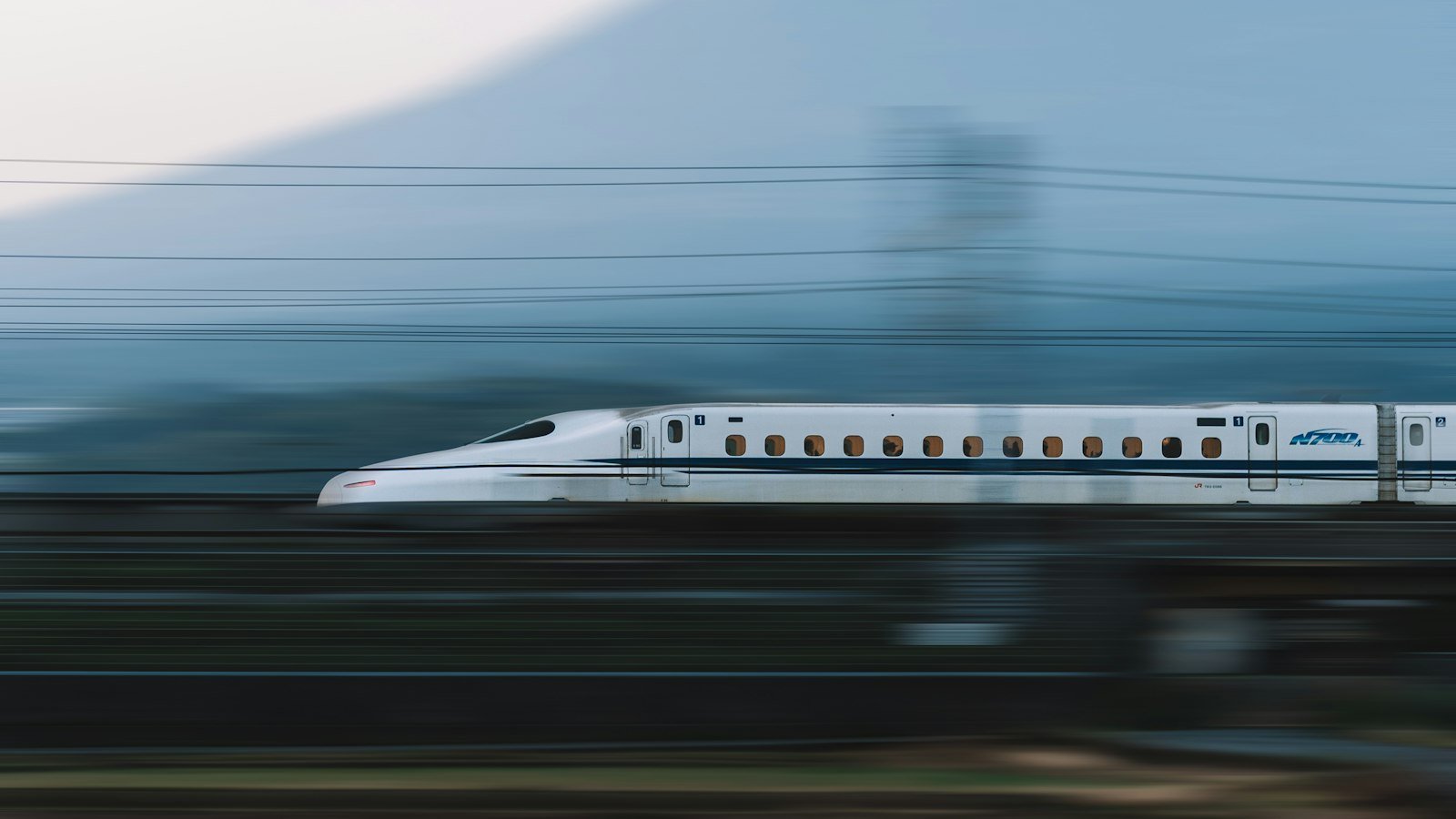
Last updated: 19 November 2026. This guide contains affiliate links; if you book through one we may earn a commission at no extra cost to you. How we make money.
Short answer: for most first trips, no. The 7-day Japan Rail Pass costs ¥50,000 bought on the official site, and the classic Tokyo–Kyoto–Osaka loop costs about ¥29,500 in single shinkansen tickets. You need roughly ¥50,000 of JR travel in seven days before the pass even breaks even, which in practice means adding a long leg such as Hiroshima, Kanazawa or Hakata, ideally more than one. If your singles add up to less than about ¥45,000, skip the pass. Above about ¥55,000, buy it. In between, it comes down to convenience.
In this guide
- What the pass costs in 2026
- What single tickets cost instead
- Seven itineraries, priced both ways
- The Nozomi problem
- What the pass does and doesn’t cover
- Cheaper alternatives: regional passes
- Is the Green pass worth it?
- Where to stay to make the rail plan work
- FAQ
What the pass costs in 2026
The nationwide pass comes in two classes (Ordinary and Green) and three lengths. At today’s prices, the old “always buy it” advice no longer holds.
There are now two price lists. Buying online through the official JAPAN RAIL PASS reservation site is cheaper than buying an Exchange Order from an overseas JR-designated travel agency.
| Pass (adult) | Official site | Overseas agency | Official site in USD / GBP |
|---|---|---|---|
| Ordinary 7-day | ¥50,000 | ¥53,000 | $313 / £238 |
| Ordinary 14-day | ¥80,000 | ¥84,000 | $500 / £381 |
| Ordinary 21-day | ¥100,000 | ¥105,000 | $625 / £476 |
| Green 7-day | ¥70,000 | ¥74,000 | $438 / £333 |
| Green 14-day | ¥110,000 | ¥116,000 | $688 / £524 |
| Green 21-day | ¥140,000 | ¥147,000 | $875 / £667 |
So the first rule is simple: if you do buy, buy on the official site. An agency 7-day pass costs ¥3,000 more for exactly the same product. Agency prices are also converted into your currency on the day the order is issued, so you carry the exchange-rate risk too.
You can only use the pass if you enter Japan with “Temporary Visitor” status. Airport automated gates do not stamp your passport, so go through a staffed lane or ask an officer for the stamp, or you may be refused when you collect the pass.
What single tickets cost instead
To know whether the pass pays, you need the fares it replaces. These are one-way, adult, standard-class reserved seats in regular season, which is what most visitors book.
| Route | Fastest train | Reserved fare | USD / GBP |
|---|---|---|---|
| Tokyo – Nagoya | Nozomi | ¥11,300 | $71 / £54 |
| Tokyo – Kyoto | Nozomi | ¥14,170 | $89 / £67 |
| Tokyo – Shin-Osaka | Nozomi | ¥14,720 | $92 / £70 |
| Tokyo – Kanazawa | Kagayaki | ¥14,600 | $91 / £70 |
| Tokyo – Sendai | Hayabusa | ¥11,630 | $73 / £55 |
| Tokyo – Hiroshima | Nozomi | ¥19,760 | $124 / £94 |
| Tokyo – Hakata (Fukuoka) | Nozomi | ¥23,810 | $149 / £113 |
| Kyoto – Hiroshima | Nozomi | ¥11,940 | $75 / £57 |
| Shin-Osaka – Hiroshima | Nozomi | ¥10,950 | $68 / £52 |
Two 2026 changes matter here. JR East raised its base fares on 14 March 2026, which nudged up routes such as Tokyo–Kanazawa and Tokyo–Sendai. On the same date, all six JR companies stopped selling round-trip tickets, along with the old 10% discount on long journeys. Any guide that quotes a “return discount” is out of date.
Reserved fees also vary with the season: ¥200 less off-peak, ¥200 more in busy periods and ¥400 more at the very busiest times. That shifts a long round trip by up to about ¥1,600, which rarely changes the verdict but can tip a borderline one.
Seven itineraries, priced both ways
Here are the trips first-timers actually plan, priced in single Nozomi tickets and compared with the ¥50,000 7-day pass. The Kyoto–Osaka hop is on the JR Special Rapid at ¥580.
| Itinerary (within 7 days) | Single tickets | vs ¥50,000 pass | Verdict |
|---|---|---|---|
| Tokyo ⇄ Kyoto | ¥28,340 | Singles save ¥21,660 | Skip the pass |
| Tokyo → Kyoto → Osaka → Tokyo | ¥29,470 | Singles save ¥20,530 | Skip the pass |
| Tokyo → Kanazawa → Kyoto → Osaka → Tokyo | ¥37,620 | Singles save ¥12,380 | Skip the pass |
| Tokyo ⇄ Hiroshima | ¥39,520 | Singles save ¥10,480 | Skip the pass |
| Tokyo ⇄ Hakata | ¥47,620 | Singles save ¥2,380 | Borderline |
| Tokyo → Kyoto → Hiroshima → Osaka → Tokyo | ¥51,780 | Pass saves ¥1,780 | Borderline |
| Tokyo → Kanazawa → Kyoto → Hiroshima → Osaka → Tokyo | ¥59,930 | Pass saves ¥9,930 | Buy the pass |
The pattern is clear. Tokyo to Kyoto and back is barely more than half the price of a pass. Even adding Hiroshima as a round trip does not get you there. The pass only starts winning when you string together three or four long legs in a week, or go as far as Fukuoka.
For quick sums, these are the break-even points: the number of one-way legs you would need to ride for the pass to pay for itself.
| Pass | Tokyo–Kyoto legs | Tokyo–Kanazawa legs | Tokyo–Hiroshima legs |
|---|---|---|---|
| 7-day, ¥50,000 | 3.5 | 3.4 | 2.5 |
| 14-day, ¥80,000 | 5.6 | 5.5 | 4.0 |
| 21-day, ¥100,000 | 7.1 | 6.8 | 5.1 |
Local JR rides add a little on top: the Narita Express to Tokyo is ¥3,140 each way, and short JR hops in Tokyo or Osaka are a few hundred yen each. They help a borderline case, but they will not rescue a trip that is ¥10,000 short.
The Nozomi problem
The Nozomi is the fastest and most frequent train on the Tokyo–Osaka–Hakata line, and the pass does not cover it. Pass holders can ride it by buying a separate Nozomi/Mizuho ticket before boarding, one per journey.
| Section | Supplement (one way) | USD / GBP |
|---|---|---|
| Tokyo – Nagoya | ¥4,180 | $26 / £20 |
| Tokyo – Kyoto or Shin-Osaka | ¥4,960 | $31 / £24 |
| Tokyo – Hiroshima | ¥6,500 | $41 / £31 |
| Shin-Osaka – Hakata | ¥4,960 | $31 / £24 |
| Hakata – Kagoshima-Chuo | ¥5,150 | $32 / £25 |
Two Nozomi legs between Tokyo and Kyoto add ¥9,920 to your pass, which wipes out the saving on every borderline itinerary above. Our view: if you buy the pass, ride the Hikari. To Shin-Osaka it is only about 20 minutes slower than the Nozomi.
Watch the calendar too. On certain dates every Nozomi between Tokyo and Hakata becomes fully reserved, with no unreserved cars. The remaining windows in this fiscal year are 21–23 November, 25 December to 5 January, 9–11 January and 20–22 March 2027. Book seats early on those dates, pass or not.
Coming in 2027: JR Central and JR West announced in October 2026 that Nozomi and Mizuho reserved fares will rise from July 2027. Tokyo to Shin-Osaka goes up ¥700 to ¥15,420, and Green Car fares rise for trips from 15 December 2027. That makes single tickets slightly dearer and the pass slightly better value, but not by enough to change the verdict on a simple Tokyo–Kyoto–Osaka trip.
What the pass does and doesn’t cover
The pass covers JR trains nationwide: every shinkansen except Nozomi and Mizuho, plus limited express, rapid and local JR trains. The official coverage page also lists some useful extras.
- Covered: the Tokyo Monorail to Haneda, the JR Miyajima ferry near Hiroshima (you pay the ¥100 Miyajima visitor tax on arrival), local JR bus routes, and short pass-through sections of a few private lines near Kanazawa and Aomori.
- Not covered: Nozomi and Mizuho without the supplement, the Tokyo Metro and Toei subways, private railways such as Odakyu, Tobu or Fujikyu (you pay for the non-JR section), JR express buses, and the Hakata–Busan ferry.
- Seat reservations are free with the pass, at ticket machines, JR ticket offices or online if you bought through the official site.
- Rules that catch people out: you must carry your passport, a lost pass is not replaced, and once the validity starts there is no refund, even if trains are cancelled.
The subway gap matters more than people expect. In Tokyo and Osaka, much of your day-to-day riding is on the metro, not JR, so the pass does not cover all your city sightseeing. Load an IC card such as Suica or ICOCA for that.
Cheaper alternatives: regional passes
If most of your travel is in western Japan, a regional pass usually beats the nationwide one. The JR West Kansai-Hiroshima Area Pass costs ¥17,000 for adults (¥8,500 for children) and gives five consecutive days of travel. It covers the Sanyo shinkansen between Shin-Osaka and Hiroshima, local and limited express JR West trains around Kyoto, Osaka, Nara and Kobe, and the Miyajima ferry.
Combine it with single tickets for the long Tokaido leg: Nozomi Tokyo to Kyoto (¥14,170), five days on the area pass (¥17,000), then Nozomi Shin-Osaka back to Tokyo (¥14,720). That is ¥45,890, about ¥4,000 less than the nationwide pass, and you ride the Nozomi without supplements. The catch is that it does not cover the Tokaido shinkansen between Kyoto and Shin-Osaka, so take the JR Special Rapid for that hop.
Like the nationwide pass, regional passes are only sold to visitors on Temporary Visitor status, and prices can change, so check the JR company’s own site before you buy.
Is the Green pass worth it?
The 7-day Green pass costs ¥20,000 more than the Ordinary pass. A Green Car seat on the Nozomi from Tokyo to Kyoto costs ¥19,040 against ¥14,170 in standard, a difference of about ¥4,900. So you need around four long Green journeys in a week to recover the extra cost. For most travellers, the standard cars on the shinkansen are comfortable enough. We would only pay for Green on a heavy itinerary at peak times, when the quieter car and easier reservations are worth having.
Where to stay to make the rail plan work
Whether you buy the pass or not, staying close to a major JR station saves more time and stress than any ticket choice. With luggage, a ten-minute walk to the shinkansen beats a subway change every time.
- Tokyo: Hotel Gracery Shinjuku is about five minutes’ walk from the East Exit of JR Shinjuku, handy for the Narita Express and the Yamanote line. Rooms are small and the area is loud at night. Our Tokyo where-to-stay guide covers quieter options near Tokyo Station, where the shinkansen leaves from.
- Kyoto: Hotel Granvia Kyoto is built into Kyoto Station itself, the easiest base for day trips to Nara, Osaka and Hiroshima. If you would rather be close to Gion and the restaurants, Cross Hotel Kyoto on Kawaramachi is a better fit; take a taxi from the station on arrival day. More in our Kyoto where-to-stay guide.
- Osaka and Fukuoka: if you are heading west, our guides to where to stay in Osaka and Fukuoka cover the areas near the main stations.
See all hotels near Kyoto Station →
Still deciding how to split your days? Our Tokyo vs Kyoto guide and the Tokyo in 5 days and Kyoto in 3 days itineraries fit together with single tickets and an open-jaw flight home from Kansai. Travelling in spring? See our cherry blossom 2027 guide.
FAQ
Is the JR Pass worth it for Tokyo, Kyoto and Osaka?
No. That loop costs about ¥29,500 in single Nozomi tickets, against ¥50,000 for the 7-day pass. Buy single tickets.
How much JR travel do I need for the pass to pay off?
About ¥50,000 in seven days, which is roughly three and a half Tokyo–Kyoto journeys or two and a half Tokyo–Hiroshima journeys. Price your route in singles first; if it is under ¥45,000, skip the pass.
Can I ride the Nozomi with a JR Pass?
Only with a separate supplement ticket bought before boarding: ¥4,960 one way between Tokyo and Kyoto or Shin-Osaka, ¥6,500 to Hiroshima. The Hikari and Sakura are included at no extra cost.
Is it cheaper to buy the pass online or from an agent?
Online. The official site sells the 7-day Ordinary pass for ¥50,000; overseas agencies charge ¥53,000 for the same pass.
Does the JR Pass cover the Tokyo subway?
No. It covers JR lines in Tokyo, including the Yamanote loop and the Tokyo Monorail, but not the Tokyo Metro or Toei subway lines.
How we researched this: in November 2026 we checked the official Japan Rail Pass price, coverage, eligibility and special ticket pages, the JR West Kansai-Hiroshima Area Pass listing, news reports of the October 2026 JR Central and JR West fare announcement, two independent 2026 shinkansen fare guides drawing on JR fare search tools, and current exchange rates. Fares and pass prices change; always confirm on the JR site before you buy.
Leave a Reply