Last updated: 16 October 2026. This guide contains affiliate links; if you book through one we may earn a commission at no extra cost to you. How we make money.
Short answer: if it’s your first time in Lisbon, stay in Baixa or Chiado. You’ll be flat-ish, central, on two metro lines and within a ten-minute walk of almost everything people come for. Pick Príncipe Real if you’d rather trade a little convenience for leafy streets and better restaurants, and Alfama only if you’re travelling light, don’t mind hills, and want to fall asleep to fado. Everything else in this guide is the “why”, plus the areas that look good on a map but will quietly ruin your trip.
Quick answer: where to stay in Lisbon
| If you are… | Stay in | Our top pick |
|---|---|---|
| A first-time visitor | Baixa & Chiado | Hotel do Chiado |
| A couple who plans trips around dinner | Príncipe Real | Memmo Príncipe Real |
| Travelling light and here for the atmosphere | Alfama | Memmo Alfama |
| Out late most nights | Cais do Sodré | LX Boutique Hotel |
| With small children or museum-obsessed | Belém | Jerónimos 8 |
In this guide
- Lisbon neighbourhoods compared
- Baixa & Chiado: best for first-timers
- Príncipe Real: best for couples and food
- Alfama: best for atmosphere (with caveats)
- Cais do Sodré & Santos: best for nightlife
- Belém: best for a quiet, museum-heavy trip
- Areas to think twice about
- What Lisbon hotels cost in 2026
- Tourist tax, airport and the hill problem
- FAQ
Lisbon neighbourhoods compared
Lisbon is a small city that feels big because it is built on hills. The neighbourhoods below are all within about 3 km of each other, but a 3 km walk here can involve 150 m of climbing. That single fact decides more holidays than any hotel review.
| Area | Best for | Hills | Night noise | Metro | Mid-range price |
|---|---|---|---|---|---|
| Baixa & Chiado | First trip, short stays | Low (Baixa) / medium (Chiado) | Low–medium | Yes, 2 lines | €120–€200 |
| Príncipe Real | Couples, food, boutique hotels | High | Low | 10-min walk | €140–€220 |
| Alfama | Atmosphere, fado, photographers | Very high | Medium (weekends) | No | €110–€180 |
| Cais do Sodré & Santos | Nightlife, under-35s | Low | High (Pink Street) | Yes + trains | €100–€170 |
| Belém | Museums, families, quiet | Low | Very low | No (tram/train) | €110–€180 |
| Bairro Alto | Bar-hopping | High | Very high Thu–Sat | 10-min walk | €90–€160 |
| Parque das Nações | Conferences, flat walking | None | Very low | Yes | €100–€150 |
Baixa & Chiado: best for first-timers
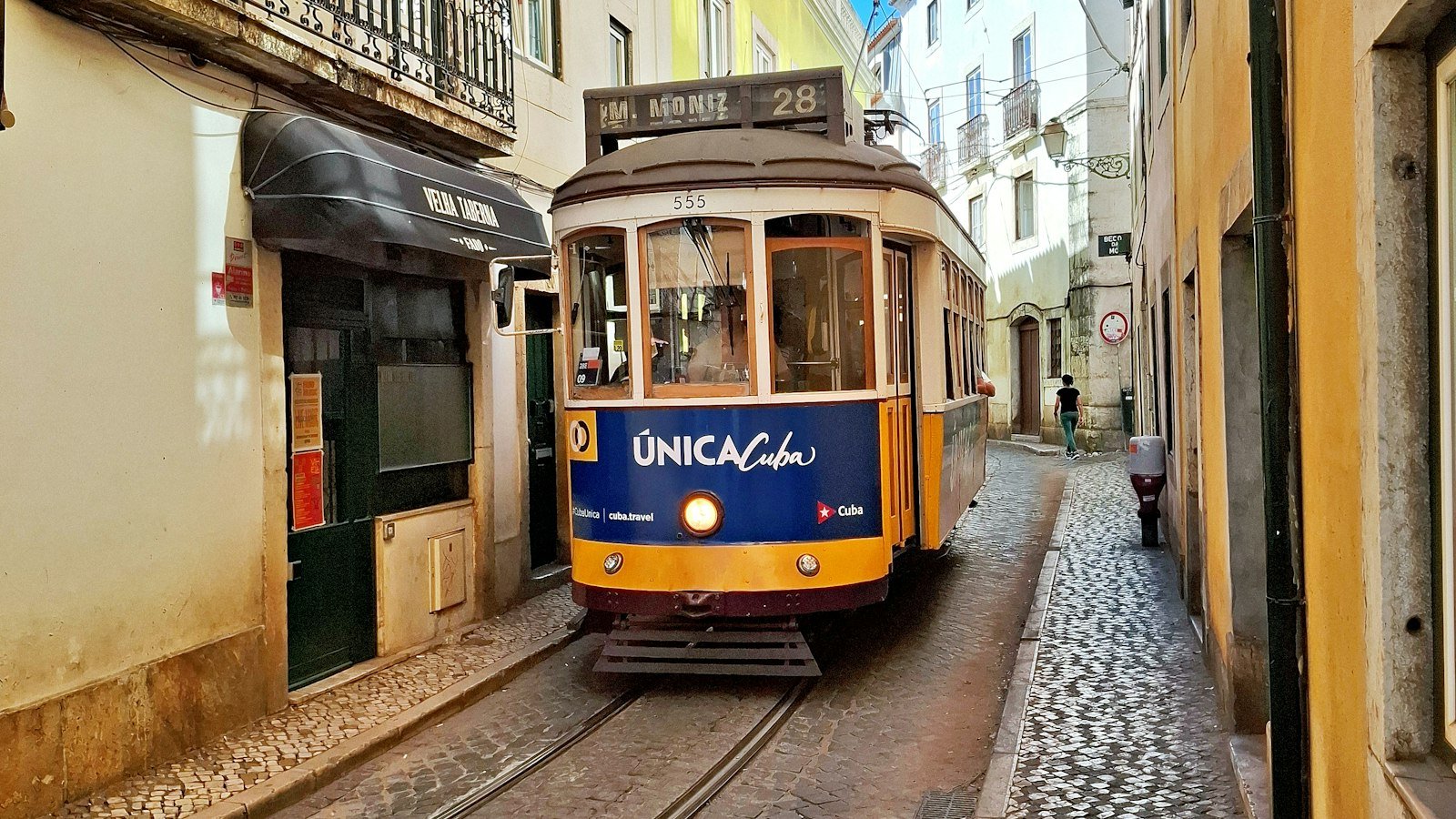
Baixa is the grid of straight streets rebuilt after the 1755 earthquake, running from Rossio down to the river at Praça do Comércio. Chiado is the slightly higher, slightly smarter district on its western edge, where the bookshops, theatres and the better cafés are. Together they are the one part of Lisbon where you can arrive from the airport by metro, roll a suitcase to your door on mostly flat pavement, and then walk to the castle, the river, Tram 28 and the Santa Justa lift without ever opening a map.
The trade-off is that Baixa empties out after the shops close and costs more at the table. You will pay €2.50 for the espresso that is €1.20 three streets north. Chiado has fewer dead evenings but more crowds and the highest hotel prices in the city.
Our picks:
- Budget: The Lift Boutique Hotel – a clean three-star on Rua de Santa Justa, literally beside the lift, with rooms that are small but well run. Usually under €110 outside summer.
- Mid-range: Hotel do Chiado – the rooftop terrace looks over the castle, and the Baixa-Chiado metro entrance is at the bottom of the building. The best-located mid-range hotel in Lisbon, which is why it books out.
- Splurge: Bairro Alto Hotel – five stars on the square between Chiado and Bairro Alto, with the rooftop bar locals actually go to. From roughly €350 a night.
See all hotels in Baixa & Chiado →
Príncipe Real: best for couples and food
Ten minutes uphill from Chiado, Príncipe Real is where Lisbon’s design shops, natural-wine bars and chef-run restaurants cluster around a garden with a 150-year-old cedar tree. It is residential, leafy and quiet after midnight. On Saturdays there is an organic farmers’ market in the garden. It is the neighbourhood we’d pick for a second visit, an anniversary, or anyone who cares more about dinner than about ticking off monuments.
The trade-off: it is hilly in every direction, the nearest metro (Rato) is a stiff walk, and hotels here are boutique-priced. With heavy luggage, take a taxi to the door rather than attempting it from Baixa-Chiado station.
- Mid-range: Casa do Jasmim by Shiadu – a guesthouse in a townhouse, with a proper homemade breakfast. Around €150.
- Splurge: Memmo Príncipe Real – a terraced hotel built into the hillside with a pool and views back over the city. The Memmo group’s flagship.
- Apartment-hotel: The Lumiares Hotel & Spa – suites with kitchenettes in a converted palace; good for stays of four nights or more.
Alfama: best for atmosphere, with caveats
Alfama is the medieval tangle below the castle that survived the earthquake, and it is the Lisbon on every postcard: laundry across the alleys, tiled façades, fado drifting out of doorways. Staying here is a real experience. It is also the neighbourhood that generates the most regretful emails.
Here is the honest version. There is no metro. Tram 28 skirts the edges and is often too full to board. Many lanes are stairs, so taxis cannot reach a lot of addresses and you will carry your bag up the last 200 metres. Friday and Saturday nights get loud around the fado houses until well past midnight. If you have a bad knee, a pushchair, a 25 kg case or an early flight, stay somewhere else and visit Alfama instead. If none of those apply, book one of these and you’ll love it.
- Mid-range: Hotel Convento do Salvador – a converted convent at the top of the hill, bright rooms, good value for the area.
- Splurge: Memmo Alfama – the terrace with the red-tiled plunge pool over the rooftops is the most photographed hotel view in Lisbon, and it earns it.
- Palace stay: Santiago de Alfama – a 15th-century palace restored as a 19-room boutique hotel, a short, steep walk below the castle gate.
Cais do Sodré & Santos: best for nightlife
Cais do Sodré used to be the red-light district by the docks; now it is the Time Out Market, the bars of Pink Street, and the station for trains to Belém, Cascais and the beaches. It is flat, well connected and the best base if your evenings matter more than your mornings. Walk west along the river and it turns into Santos, which is calmer, full of galleries and design studios, and where the better apartment-hotels have opened.
The trade-off: Pink Street noise carries several blocks on weekends. Ask for a courtyard-facing room, or stay in Santos and walk in.
- Mid-range: LX Boutique Hotel – each floor themed on a Lisbon icon, right by the station; a reliable €120–€160 choice.
- Design pick: JAM Lisbon – a carbon-neutral warehouse conversion in Santos with a rooftop pool and a bar that fills with locals.
- Splurge: As Janelas Verdes – an 18th-century mansion next to the National Museum of Ancient Art, with a walled garden and a library bar. Quiet, romantic, slightly old-fashioned in the best way.
Belém: best for a quiet, museum-heavy trip
Six kilometres west of the centre, Belém is flat, riverside and home to the two sights every visitor sees anyway: the Jerónimos Monastery and the Belém Tower, plus the MAAT museum and the original pastel de nata bakery. If you are travelling with small children, hate crowds at night, or plan to spend serious time in museums, it is a calm base. The catch is a 15-minute train or 20-minute tram into town every time you want dinner in the centre, and no metro at all.
- Mid-range: Jerónimos 8 – a modern four-star a minute’s walk from the monastery.
- Splurge: Altis Belém Hotel & Spa – on the marina, with an infinity pool facing the river and a Michelin-starred restaurant.
Areas to think twice about
Bairro Alto is wonderful at 11 pm and miserable at 3 am, when the bars empty onto cobbles that echo like a drum. Hotels advertise “in the heart of the nightlife” as a feature; for sleepers it is a warning. Stay on the Chiado side of it or bring serious earplugs.
Parque das Nações, the Expo ’98 district by the Oriente station, is spotless, flat and 20 minutes by metro from anything historic. It suits conferences and the Oceanarium. It does not feel like Lisbon.
Mouraria and Intendente are the next neighbourhoods to gentrify and have the cheapest decent rooms in the city, but they are patchy at night and short on hotels. Fine for confident repeat visitors; not the place for a nervous first trip.
Anywhere near the airport. The metro ride is only 25–30 minutes, so there is no reason to sleep out there unless you have a 6 am flight.
What Lisbon hotels cost in 2026
Lisbon is no longer the bargain it was a decade ago, but it is still cheaper than Paris, Amsterdam or Rome for a comparable room. Based on current rates for spring and autumn:
| Type | Per night (EUR) | Roughly in USD / GBP |
|---|---|---|
| Hostel dorm bed | €22–€35 | $24–$38 / £19–£30 |
| Simple guesthouse or 2-star | €70–€100 | $76–$108 / £60–£86 |
| Good 3–4-star double, central | €120–€200 | $130–$216 / £103–£172 |
| Boutique / 5-star | €250–€450+ | $270–$486+ / £215–£387+ |
When to book: for April to October, two to three months ahead gets you the hotel you actually want; the small boutique places with 10–20 rooms sell out first. Outside those months, four to six weeks is usually fine.
Tourist tax, airport and the hill problem
Tourist tax. Lisbon charges €4 per person per night (the Câmara Municipal de Lisboa doubled it from €2 in September 2024), for a maximum of seven nights per stay, for everyone aged 13 and over. It applies to hotels and to Airbnb-style rentals alike. Most booking sites now add it to your total; if yours doesn’t, the hotel will collect it at check-in.
Getting in from the airport. The Metro de Lisboa red line starts at the airport and runs 6:30 am to 1 am. A single fare is €1.90 plus €0.50 for the reusable Navegante card, and you’ll change once (Alameda for the green line to Baixa-Chiado). Allow 30–35 minutes door to platform. A taxi to the centre is €15–€20 plus a €1.60 luggage charge; Uber and Bolt are usually around €10 but can mean a long wait from the P2 car park on Friday and Saturday evenings. The old Aerobus was scrapped in 2022, whatever older guides say.
The hill problem. Before you book, open the hotel’s address in Google Maps, switch to Street View, and look at the street. If it is stairs, or the pavement is a 45-degree ramp of polished limestone, that is your daily commute. Baixa, Cais do Sodré, Belém and Parque das Nações are the flat options. Everywhere else, pack lighter than you think you need to.
Getting around once you’re there. Load a Navegante card with “zapping” credit and every metro, bus, tram and funicular ride costs €1.72. A 24-hour pass is €7.25. Tram 28 is a sight, not a transport system: ride it once, early in the morning, from the Martim Moniz end, and watch your pockets.
FAQ
Is Baixa or Chiado better?
Chiado, if the budget stretches. It is livelier in the evening and five minutes closer to Bairro Alto and Príncipe Real. Baixa is flatter, a touch cheaper and fine for short stays, but it goes quiet after 8 pm.
How many nights do I need in Lisbon?
Three full days covers the centre and Belém without rushing. Add a fourth for Sintra, which is the day trip everybody takes and nobody regrets.
Is Lisbon safe to stay in?
Yes. Violent crime against tourists is rare. The real risk is pickpocketing on Tram 28, in the Baixa-Chiado metro station and around Rossio late at night, so keep phones and wallets in front pockets or a zipped bag.
Hotel or apartment?
For three nights or fewer, a hotel: you get a lift, someone to hold your bags, and no risk of the listing being one of the city’s increasingly unlicensed rentals. For a week or more with children, an apartment-hotel such as The Lumiares or JAM gives you a kitchen without the gamble.
What’s the best area for a first-time visitor on a budget?
Cais do Sodré, in a courtyard-facing room. It is flat, connected to the metro and the trains, and its mid-range hotels undercut Chiado by €30–€50 a night.
How we researched this: neighbourhood descriptions, prices and transport details were cross-checked in October 2026 against Lisbon’s municipal tourist-tax rules, Metro de Lisboa fares, current hotel rates on major booking sites, and recent on-the-ground reports from travellers and Lisbon-based writers. Prices move; always confirm before you book.
Leave a Reply